
Blog
Essential Oils for Odor Elimination: Best Natural Scents, Diffuser Placement, and Room-by-Room Deodorizing Guide

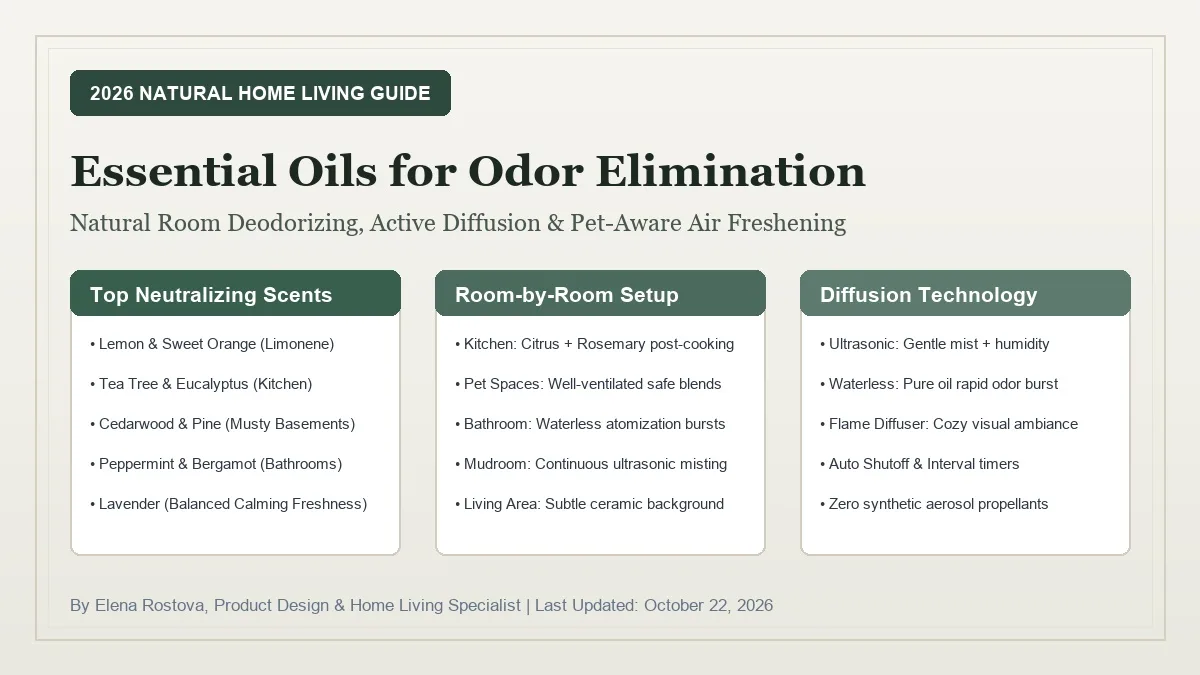
Short answer: The most effective essential oils for odor elimination are natural citrus oils (lemon, sweet orange, bergamot), clarifying botanicals (tea tree, eucalyptus, rosemary), and crisp wood resins (cedarwood, pine). Rather than temporarily masking airborne odors with synthetic phthalates, high-quality essential oils for odor elimination neutralize volatile scent molecules, purify stale indoor air, and introduce clean, natural freshness when paired with modern ultrasonic or waterless diffusers.
Unlike commercial aerosol sprays that coat nasal receptors with synthetic chemicals, botanical aromatherapy targets the underlying causes of household smells—such as airborne grease, moisture accumulation, microbial dampness, and pet dander. By understanding the chemical makeup of natural aromatic compounds and deploying targeted diffusion routines across your home, you can maintain a fresh, inviting living space safely and sustainably.
By Elena Rostova, Product Design & Home Living Specialist | Last updated: October 22, 2026
Top essential oils for odor elimination: the quick guide
| Essential Oil | Primary Aromatic Profile | Target Household Odors | Best Diffusion Format | Pet Safety Awareness |
|---|---|---|---|---|
| Lemon (Citrus limon) | Bright, sharp citrus (high d-limonene) | Kitchen grease, fried food, fish, trash bins | Ultrasonic cool mist (15–30 min cycles) | Diffuse in ventilated rooms; keep out of reach |
| Sweet Orange (Citrus sinensis) | Warm, uplifting citrus sweetness | Musty living rooms, stale bedroom air, closets | Ceramic ultrasonic or ambient reed | Safe in low concentrations with open doors |
| Tea Tree (Melaleuca alternifolia) | Camphorous, medicinal, intensely clean | Bathroom mildew, humid laundry, diaper pails | Intermittent waterless atomization | Toxic to cats & dogs; use in pet-free zones |
| Eucalyptus (Eucalyptus globulus) | Fresh, crisp, clearing herbal (cineole) | Stale tobacco smoke, entryway shoes, stuffiness | Ultrasonic humidifier diffuser | Avoid near felines; ensure active ventilation |
| Cedarwood (Juniperus virginiana) | Earthy, warm, balsamic woodiness | Basement dampness, wardrobe moths, gym bags | Flame-effect ultrasonic or ceramic stone | Generally well-tolerated when moderately diffused |
| Lavender (Lavandula angustifolia) | Soft floral, herbaceous, calming | Pet bed areas, bedroom linens, daily lingering odors | Nighttime ultrasonic cool mist | Cat-safe only in trace amounts; keep direct oils away |
Selecting the right botanical scent requires matching the specific odor source with an aromatic compound that has the chemical capability to neutralize it. For instance, high-limonene citrus oils dissolve airborne lipid particles from cooking, whereas terpene-rich conifers bind with sulfurous dampness in subterranean spaces.
How essential oils neutralize odors versus synthetic masking sprays
Traditional aerosol air fresheners rely heavily on synthetic fragrance blends, synthetic propellants, and chemical masking agents. According to indoor air quality research published by the United States Environmental Protection Agency (EPA), conventional aerosol air fresheners often emit volatile organic compounds (VOCs) and synthetic phthalates that degrade indoor air quality and irritate respiratory pathways.
In contrast, using pure essential oils for odor elimination leverages naturally occurring terpenes, aldehydes, and phenolic compounds. Plant-derived oils work through three distinct deodorizing mechanisms:
- Molecular Binding and Encapsulation: Terpenes like d-limonene and alpha-pinene bind with airborne odor compounds (such as hydrogen sulfide and butyric acid), altering their molecular structure so human olfactory receptors no longer register the offensive smell.
- Antimicrobial Airborne Action: Studies compiled by the National Center for Complementary and Integrative Health (NCCIH) indicate that therapeutic botanical extracts possess measurable antimicrobial and antifungal properties that inhibit odor-generating bacterial spores suspended in humid air.
- Olfactory Resetting: Natural citrus and herbal essences stimulate clean olfactory sensory receptors, replacing foul odors with an authentic botanical aroma that refreshes the brain rather than causing sensory fatigue or headaches.
The 5 most effective essential oils for household odor removal
1. Lemon and Citrus Blends (Best for Kitchen and Grease Odors)
Cold-pressed lemon, pink grapefruit, and bergamot essential oils contain up to 95% d-limonene. This potent monoterpene is world-renowned for cutting through stubborn airborne cooking residues, burnt garlic, fried oil smells, and organic compost odors. Diffusing 4–6 drops of lemon essential oil immediately after meal preparation clears the kitchen atmosphere within minutes.
2. Tea Tree and Rosemary (Best for Mildew and Damp Humidity)
Bathrooms, basement laundry rooms, and damp mudrooms often harbor stagnant moisture smells caused by micro-fungi. Melaleuca (tea tree) oil and Spanish rosemary provide high concentrations of terpinen-4-ol and 1,8-cineole. These powerful compounds actively target damp, musty airborne particles, making them indispensable for humid home zones.
3. Cedarwood and Pine (Best for Basements, Mudrooms, and Closets)
Coniferous oils derived from Virginian cedarwood, Scots pine, and Siberian fir produce an invigorating forestry aroma that counteracts locked-in storage smells, stale leather, wet coats, and damp shoe cabinets. Their heavy sesquiterpene base notes linger longer than volatile top citrus notes, providing sustained ambient freshness over several hours.
4. Peppermint and Spearmint (Best for Rapid Air Refreshment)
The high menthol content of pure peppermint oil produces an immediate cooling, deodorizing sensation that cuts through pungent trash can odors and stagnant drain smells. When combined with lemon or eucalyptus in an ultrasonic diffuser, mint creates an intensely crisp micro-climate that makes stuffy rooms feel immediately aerated.
5. True Lavender (Best for Pet Areas and Daily Living Spaces)
For everyday living rooms and bedrooms where pets and family gather, French lavender (Lavandula angustifolia) offers a gentle, non-irritating floral-herbaceous scent profile. It softens animal odors and stale upholstery smells without the sharp, overwhelming intensity of synthetic linen sprays.
Room-by-room natural deodorizing playbook
Every room presents unique odor dynamics and airflow patterns. Here is how to configure your home diffusion setup for optimal scent clarity and air freshness.
Kitchen and Open-Plan Dining: Counteracting Cooked Odors
Cooking cruciferous vegetables, seafood, or spicy dishes releases volatile sulfur compounds that adhere to curtains and kitchen cabinetry. Place a high-output ultrasonic unit, such as the Peer’s Home Ceramic Ultrasonic Aroma Diffuser, on a central island or counter away from open heat sources. Run a 30-minute post-cooking cycle with 4 drops of Lemon, 2 drops of Rosemary, and 2 drops of Sweet Orange to completely clear the air.
Bathrooms and Powder Rooms: Rapid Odor Neutralization
Bathrooms suffer from intermittent high humidity and rapid odor spikes. Because water tanks can collect excess condensation in compact bathrooms, a compact battery-powered nebulizer like the Peer’s Home Battery Mini Waterless Diffuser is ideal. Pure oil atomization delivers an instant, un-diluted burst of Eucalyptus and Peppermint without adding unwanted humidity to the room.
Living Rooms and Entryways: Welcoming Ambient Freshness
The entryway sets the first impression for guests. Shoe racks, wet umbrellas, and outerwear often create a complex mixture of stale smells. A warm, visual statement piece like the Peer’s Home Flame Effect Aroma Diffuser creates an inviting visual glow while steadily diffusing a welcoming blend of Bergamot, Cedarwood, and Lavender across your main foyer.
Ultrasonic vs waterless diffusers for odor elimination
When selecting a diffusion appliance specifically to tackle household odors, consider the performance differences between water-based ultrasonic misting and cold-air waterless nebulization:
| Feature | Ultrasonic Cool-Mist Diffuser | Waterless Nebulizing Diffuser |
|---|---|---|
| Carrier Medium | Water reservoir + 5–10 oil drops | Pure essential oil bottle (no water added) |
| Dispersion Speed | Gradual, gentle, continuous plume | Instant, highly concentrated aromatic burst |
| Coverage Area | 200–400 sq. ft. (medium to large rooms) | 100–300 sq. ft. (targeted localized zones) |
| Humidification Benefit | Adds gentle moisture to dry indoor air | Zero humidity addition; ideal for damp areas |
| Best Use Case | Kitchens, bedrooms, living spaces, daily routine | Bathrooms, walk-in closets, rapid odor events |
Pet safety guidelines when diffusing for odor control
While eliminating pet odors is a top priority for animal lovers, companion animal physiology is significantly more sensitive to aromatic compounds than human physiology. According to veterinary toxicologists at the ASPCA Animal Poison Control Center, cats lack the essential glucuronyl transferase liver enzyme required to metabolize phenolic oils, while dogs have highly sensitive olfactory membranes.
Follow these essential veterinary safety rules, outlined by clinical experts at VCA Animal Hospitals:
- Maintain an Open Door Policy: Never operate any essential oil diffuser inside an enclosed room where a pet cannot freely leave if the scent feels overwhelming.
- Never Apply Oils to Pet Fur or Beds Directly: Concentrated essential oils must never be sprayed directly onto dog beds, cat scratching posts, or pet fur. Ingestion during grooming can lead to acute poisoning.
- Oils to Avoid Around Pets: Strictly avoid diffusing Tea Tree (Melaleuca), Pennyroyal, Wintergreen, Cinnamon Bark, Clove, and concentrated Pine in small rooms shared with cats and puppies.
- Pet-Safe Alternatives: Stick to mild concentrations of True Lavender, Frankincense, Chamomile, and Sweet Orange in well-ventilated, large rooms on intermittent timer cycles.
Frequently asked questions about essential oils for odor elimination
Which essential oil is best for eliminating strong cooking smells?
Lemon, pink grapefruit, and sweet orange essential oils are the most effective for kitchen smells. Their high d-limonene content breaks down airborne grease droplets and neutralizes fish, curry, and garlic aromas within 15 to 30 minutes of diffusion.
How do essential oils eliminate odors instead of just masking them?
Essential oils contain natural monoterpenes and aldehydes that chemically bind to volatile malodor molecules in the air, neutralizing their olfactory impact. Unlike synthetic aerosols that coat nasal passages, botanical oils purify indoor air naturally.
Is it safe to diffuse essential oils to remove pet odors?
Yes, provided you use pet-safe oils like sweet orange, cedarwood, or diluted lavender in well-ventilated rooms with doors open so pets can leave freely. Avoid toxic oils like tea tree, pennyroyal, wintergreen, and clove around cats and dogs.
How many drops of essential oil should I use for room deodorizing?
For standard 100ml to 150ml ultrasonic diffusers, 4 to 6 drops of essential oil provide optimal deodorizing power without overwhelming room occupants. In larger living rooms with 300ml+ reservoirs, use 7 to 9 drops.
Should I use an ultrasonic or waterless diffuser for bad smells?
Use an ultrasonic diffuser for living rooms and kitchens where continuous gentle misting clears large spaces. Use a waterless nebulizing diffuser for bathrooms and closets where concentrated, instant odor elimination is required without adding moisture.
How long should I run a diffuser to eliminate room odors?
An intermittent cycle of 30 to 60 minutes is usually sufficient to clear kitchen, pet, or bathroom odors. Avoid running diffusers continuously for hours in unventilated rooms to prevent olfactory fatigue and respiratory irritation.
Can essential oils help eliminate musty basement or mold smells?
Cedarwood, pine, and tea tree oils are highly effective at counteracting musty basement odors. However, essential oils complement rather than replace physical moisture remediation, dehumidification, and proper ventilation.
Always read device user manuals and consult your veterinarian before introducing new botanical scents into homes with small pets or family members with respiratory sensitivities.