
Blog
Hotel Scent Branding: A B2B Strategy for Guest Experience and Brand Consistency

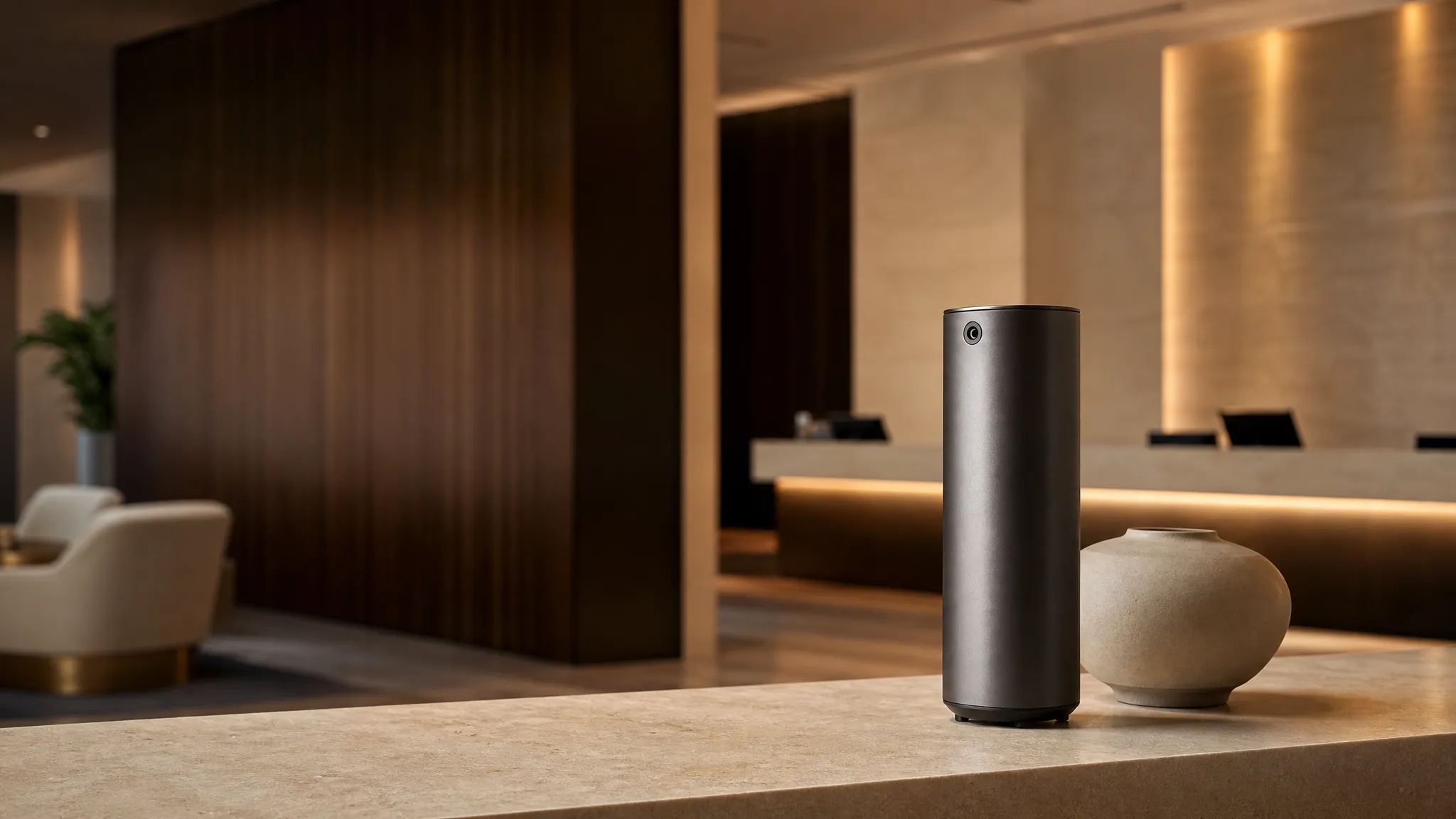
A hotel can invest heavily in lighting, materials, uniforms, and service scripts, yet still deliver an inconsistent arrival experience if its scent program changes from one zone to the next. A lobby diffuser may use one fragrance, a spa another, and a guest room a third with no shared logic. Guests experience the property as one brand. Procurement teams need a system that makes that experience repeatable. This guide explains how hotel scent branding can move from a decorative idea to a controlled B2B operating program.
Marcus Sterling, Director of Hospitality & Commercial Scenting at PeersHome, works with hotel groups that need a fragrance language aligned with their guest journey, property tier, and facility operations. The goal is not to make every area smell equally strong. The goal is to define where scent belongs, how it transitions, how staff manage it, and how the team reviews its effect without making unsupported promises.
1. Define the brand role before choosing a fragrance
Start with the property’s positioning rather than a list of popular fragrance notes. A resort, business hotel, boutique property, and extended-stay brand may all need different scent behavior. The brief should describe the guest promise, the main arrival moments, the visual material palette, and the level of sensory presence the operation can support.
- Brand character: calm, energetic, discreet, natural, urban, or heritage-led.
- Guest journey: arrival, check-in, lift lobby, room entry, spa, dining, and departure.
- Visual language: stone, timber, textile, metal, greenery, or other confirmed materials.
- Operational boundaries: ventilation, room adjacency, quiet hours, and housekeeping access.
- Approval owners: brand, procurement, operations, engineering, and property management.
This brief gives a hotel scent branding supplier a clear commercial context. A hotel scent branding program should be written as a brand and operations brief, not just a fragrance request. It also keeps the fragrance discussion connected to the property instead of allowing a sample strip to dictate the brand direction.
2. Map scent zones across the guest journey
A hotel scent branding plan should not treat every square metre as a scenting target. Map zones according to guest dwell time, air movement, adjacent functions, and the desired transition between spaces. The entrance may need a clear arrival signature, while a sleeping area may require a lower sensory presence or no active scent at all.
| Zone | Operational question | Branding objective |
|---|---|---|
| Entrance and lobby | Where do guests first encounter the property? | Establish an identifiable arrival character |
| Lift and corridor | How does air move between zones? | Maintain a controlled transition |
| Guest room | What sensory level suits rest and privacy? | Support a consistent room-entry experience |
| Spa and wellness | Which scent language belongs to treatment? | Separate wellness atmosphere from public arrival |
| Meeting and dining | Could scent compete with food or conversation? | Use restraint and protect the function |
Zone mapping turns hotel scent branding into a plan that facilities, housekeeping, and procurement can use. It also reduces the risk of installing a diffuser simply because a power outlet or console is available. For a related deployment framework, see our hotel lobby diffuser wholesale guide.
3. Choose the scent architecture, not just one note
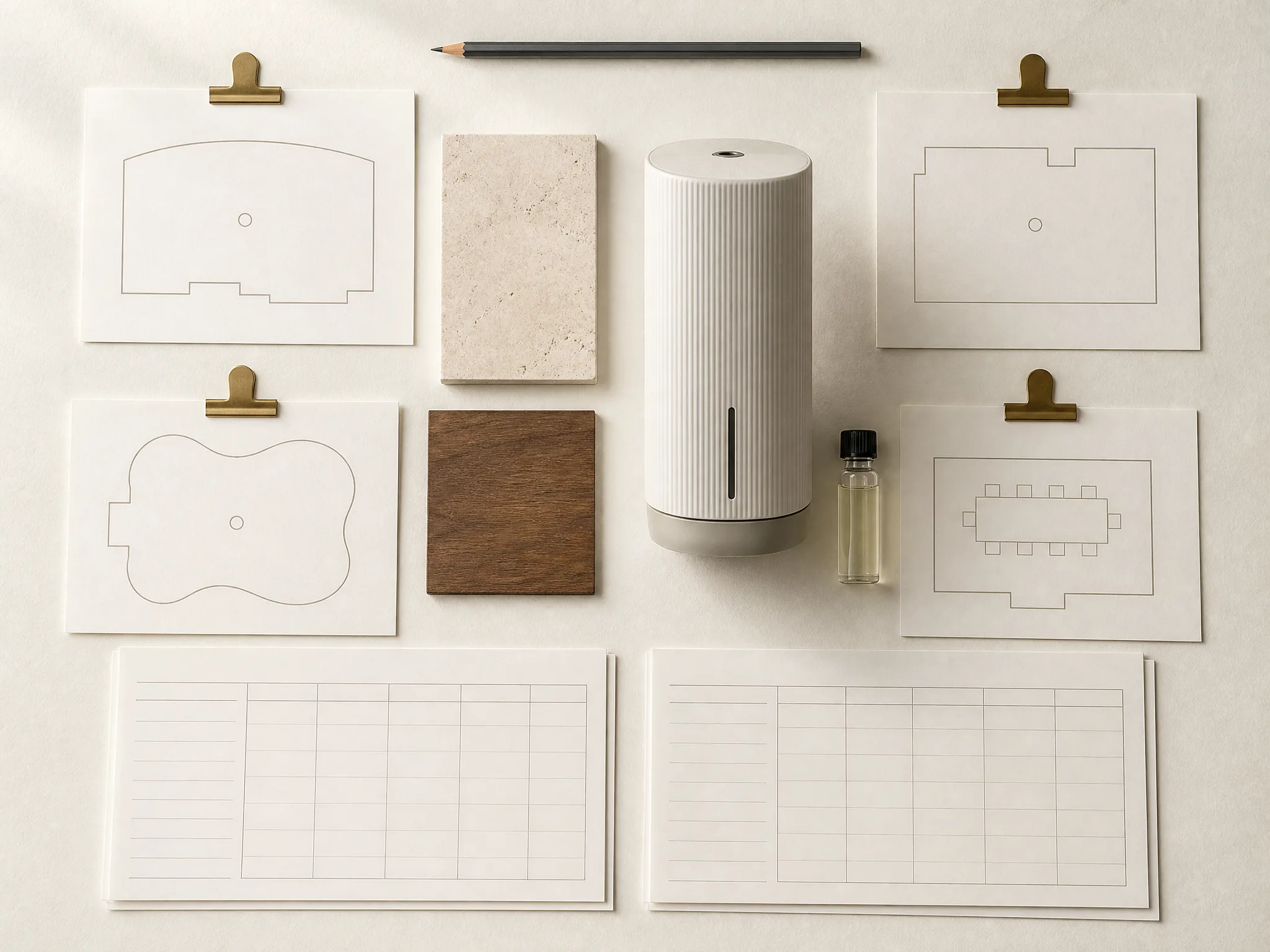
Many buyers begin a hotel scent branding project by asking for “a signature scent.” The more useful question is how that scent should behave across formats and moments. A hotel may need one core fragrance, a lighter related variation, or a deliberately unscented zone. Define the relationship between the core, supporting, and excluded profiles before requesting a final formula.
Review the opening impression, development, and settled character in the intended environment. Note whether the fragrance reads differently on a reception console, inside a corridor, or near a textile-heavy room. Keep the language practical: dry, citrus-led, woody, herbal, resinous, airy, or warm. Avoid turning a fragrance description into a medical or emotional guarantee.
4. Match diffuser technology to the property operation
The diffuser format should follow the property’s facilities plan. A commercial waterless diffuser may suit a lobby or shared public zone where the team needs a contained device and scheduled operation. A passive format may suit a smaller display or amenity area. The decision should account for placement, refill access, cleaning, power, noise, scent material, and the person responsible for daily checks.
- Record the intended zone and the approved diffuser format.
- Confirm how staff access the reservoir, cartridge, reeds, or other consumable.
- Document the cleaning and storage routine for the property team.
- Check whether the device fits the console, shelf, cabinet, or service area.
- Keep the fragrance reference tied to the approved device and component set.
A strong hotel scent branding program does not force one diffusion technology into every location. It assigns a suitable format to each operational job while keeping the overall fragrance language recognizable. Teams comparing equipment can also review our commercial scent diffusers multi-site guide.
5. Build a pilot that staff can actually run
Approve the hotel scent branding program in the real property, not only in a supplier showroom. Install the proposed device in the intended zone and ask the operations team to complete the normal routine. Review the first placement, refill or cartridge handling, cleaning access, storage, guest-facing visibility, and communication between engineering and housekeeping.
Keep a pilot record with the zone, device version, fragrance reference, installation date, responsible owner, and observations. If the hotel group has more than one property, repeat the pilot in spaces with different ventilation or material conditions. A controlled pilot reveals operational friction before the program becomes a multi-site standard.
6. Protect consistency through packaging and documentation
Packaging is part of the hotel scent branding system and the service system. Guest-facing components should fit the property’s visual language. Back-of-house cartons, labels, and records should make version control easy. Keep the approved fragrance name, formula reference, batch information, device model, and component version connected in the procurement file.
If a supplier changes a carrier, concentration, bottle, closure, label, reed, cartridge, carton, or packing method, require notification before the change reaches the property. A product name alone does not prove that a later shipment is identical to the approved sample.
7. Create a measurement framework without overclaiming
Hotel scent branding should be reviewed with operating evidence, not a vague promise of stronger loyalty. A disciplined hotel scent branding review separates guest observations from unsupported attribution. Track practical signals that the hotel can define and repeat. These may include staff feedback, guest comments that specifically mention the environment, maintenance incidents, refill requests, zone complaints, and consistency between properties. Keep the observation window and question wording stable when comparing periods.
| Measurement area | Record | Decision use |
|---|---|---|
| Guest feedback | Comments that mention the atmosphere or smell | Identify recurring experience signals |
| Operations | Refill, cleaning, and service incidents | Improve the daily workflow |
| Zone consistency | Approved device and fragrance by location | Find unauthorized substitutions |
| Staff response | Ease of handling and clarity of instruction | Refine training and documentation |
| Property comparison | Same review questions across sites | Separate local issues from program issues |
Research on the multisensory hotel experience in Frontiers in Psychology via PubMed Central discusses how scent can contribute to the broader guest journey while emphasizing the need to consider the whole sensory environment. A separate review of hotel cleanliness perception, also available through PubMed Central, shows why scent-related observations should be interpreted carefully rather than treated as a direct causal claim.
8. Align procurement, brand, and facilities approval
The best fragrance can fail if the approval path is unclear. Brand teams may focus on the guest story, procurement on continuity and documentation, and engineering on power, access, noise, and maintenance. Bring these groups into the same review before a property-wide order.
- Brand: approves the scent direction, naming, and visual context.
- Procurement: controls supplier records, approved versions, and reorder routes.
- Engineering: confirms placement, power, access, and service conditions.
- Housekeeping: reviews cleaning, storage, and room-level handling.
- Property management: signs off on the guest journey and local execution.
This cross-functional review makes hotel scent branding scalable because the fragrance idea is translated into ownership, documentation, and service actions.
9. Plan multi-property rollout in controlled stages
Do not move from one successful lobby pilot directly to every property in a hotel scent branding rollout. First confirm the approved scent and device combination, then define the property types, zone standards, packaging references, service documents, and escalation route. Rollout should make local adaptation possible without allowing each site to create a different scent identity.
Keep a central master file with the approved sample, fragrance reference, device and component list, image references, and change history. Each property can add local notes, but it should not replace the central standard without a documented review. For packaging and transit considerations, see our hotel diffuser packaging guide.
10. Use a final hotel scent branding checklist
Before approving a hotel scent branding supplier or rollout, confirm the following:
- The property positioning and guest journey are written in the brief.
- Each scent zone has a defined purpose, owner, and operational boundary.
- The approved fragrance architecture covers core, related, and excluded profiles.
- Diffuser technology matches placement, access, cleaning, and refill needs.
- The sample has been piloted by the staff who will operate it.
- Formula, batch, packaging, and device records are linked.
- Measurement questions and observation periods are defined before rollout.
- Property-level changes require notification and approval.
A hotel does not need the strongest possible scent to create a memorable arrival. It needs a coherent scent language, appropriate technology, disciplined zone planning, and a service routine that staff can repeat. When brand, procurement, engineering, and housekeeping work from the same standard, hotel scent branding becomes a practical part of the guest experience rather than an isolated decorative purchase.
— Marcus Sterling, B2B Scent Strategist
Deploy premium hotel scent branding today. Request a demo unit for your property.