Blog
Aromatherapy Diffuser Product Development: A B2B OEM Design Cycle Guide

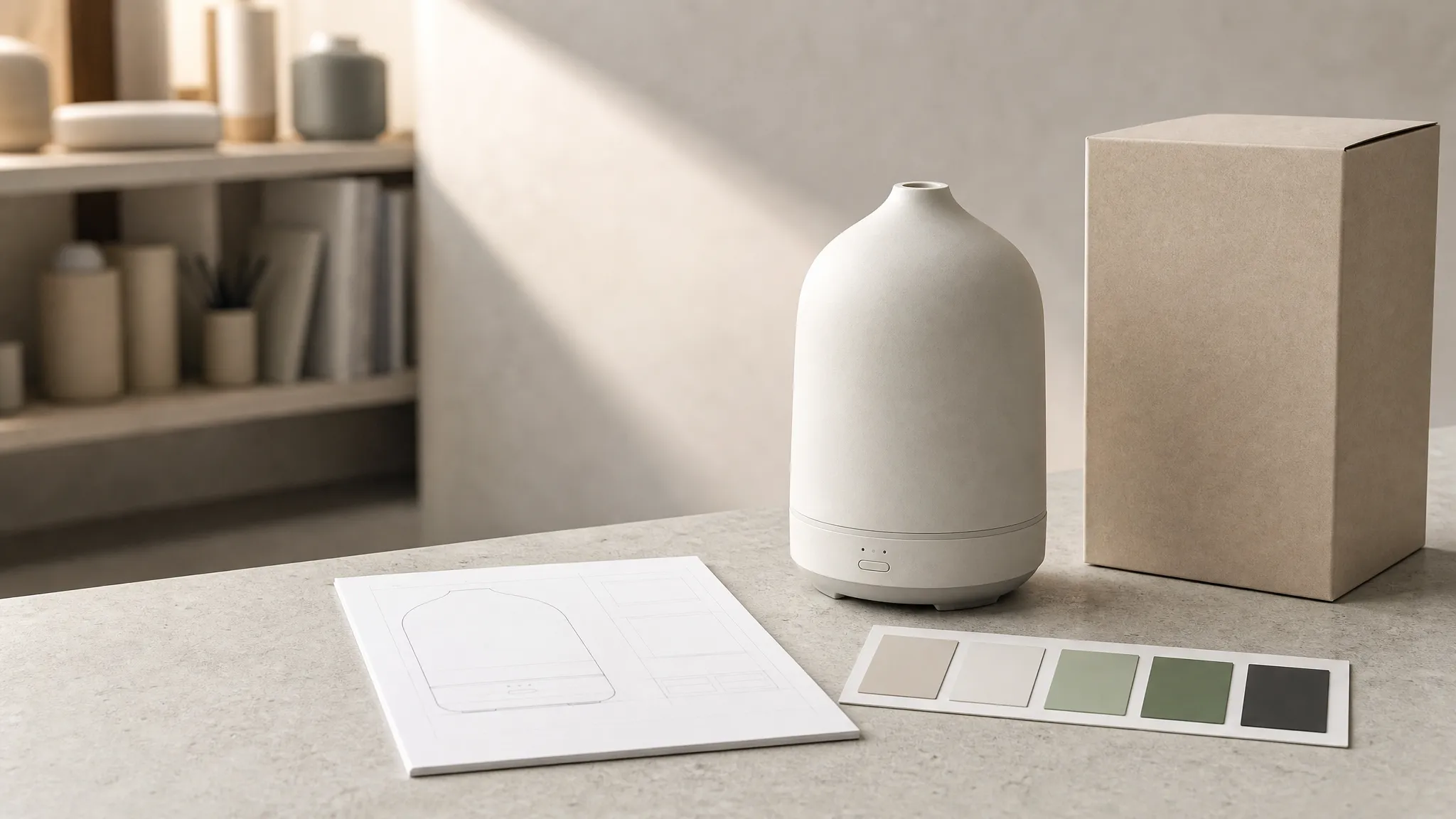
A diffuser project rarely fails because a brand lacks a visual idea. It fails when the idea cannot become a repeatable product. A sketch may ignore refill access, a material choice may react poorly to fragrance, or a prototype may look finished before the supplier has agreed on tolerances and change control. A disciplined aromatherapy diffuser product development cycle connects brand intent with industrial design, component engineering, packaging, testing, and production readiness.
Elena Rostova, Product Design & OEM/ODM Director at PeersHome, works with wellness brands and hospitality buyers moving from a concept board to a manufacturable diffuser. This guide outlines a practical B2B cycle: brief, research, CMF direction, prototype, pilot, approval, and controlled handoff.
1. Begin with a product brief, not a product photo
The first document should explain what the diffuser must do for the brand and where it will be used. A bedside diffuser, hotel-lobby unit, treatment-room device, and retail gift product have different constraints. A useful brief records the target customer, placement, handling, fragrance format, refill route, surface language, destination market, and approval owner.
- Use environment: bedroom, lobby, treatment room, reception, retail shelf, or office.
- Handling pattern: guest, therapist, housekeeping, facilities, or retail staff.
- Fragrance format: oil bottle, cartridge, reed, waterless delivery, or another approved system.
- Design language: material palette, silhouette direction, surface finish, and brand references.
- Commercial route: wholesale, private label, hospitality rollout, retail launch, or OEM program.
This brief makes aromatherapy diffuser product development measurable. It also gives every aromatherapy diffuser product development decision a clear business and operating context. It gives the supplier a decision framework before the first sample and reduces the chance that the process becomes a sequence of disconnected visual revisions.
2. Separate verified requirements from visual direction
Not every design preference is a technical requirement. Separate the brief into three layers: non-negotiable product requirements, preferred visual direction, and open questions that the supplier must investigate. This keeps the project flexible without allowing the central purpose to drift.
| Brief layer | Example content | Review method |
|---|---|---|
| Required | Placement, approved fragrance format, handling, market, and pack route | Buyer sign-off before sampling |
| Preferred | Matte surface, warm neutral palette, soft silhouette, or CMF reference | Design review and sample comparison |
| To investigate | Material compatibility, access, service, or packaging fit | Supplier test or prototype gate |
| Change-controlled | Formula, vessel, closure, insert, label, or component substitution | Written notification and approval |
| Open commercial item | Production route, documentation, lead-time plan, and reorder path | Procurement review before launch |
A clear separation helps an aromatherapy diffuser product development team explain why a design change is needed, and lets a second aromatherapy diffuser product development supplier review the same brief instead of presenting every change as a matter of taste.
3. Use CMF to connect the diffuser with the brand world
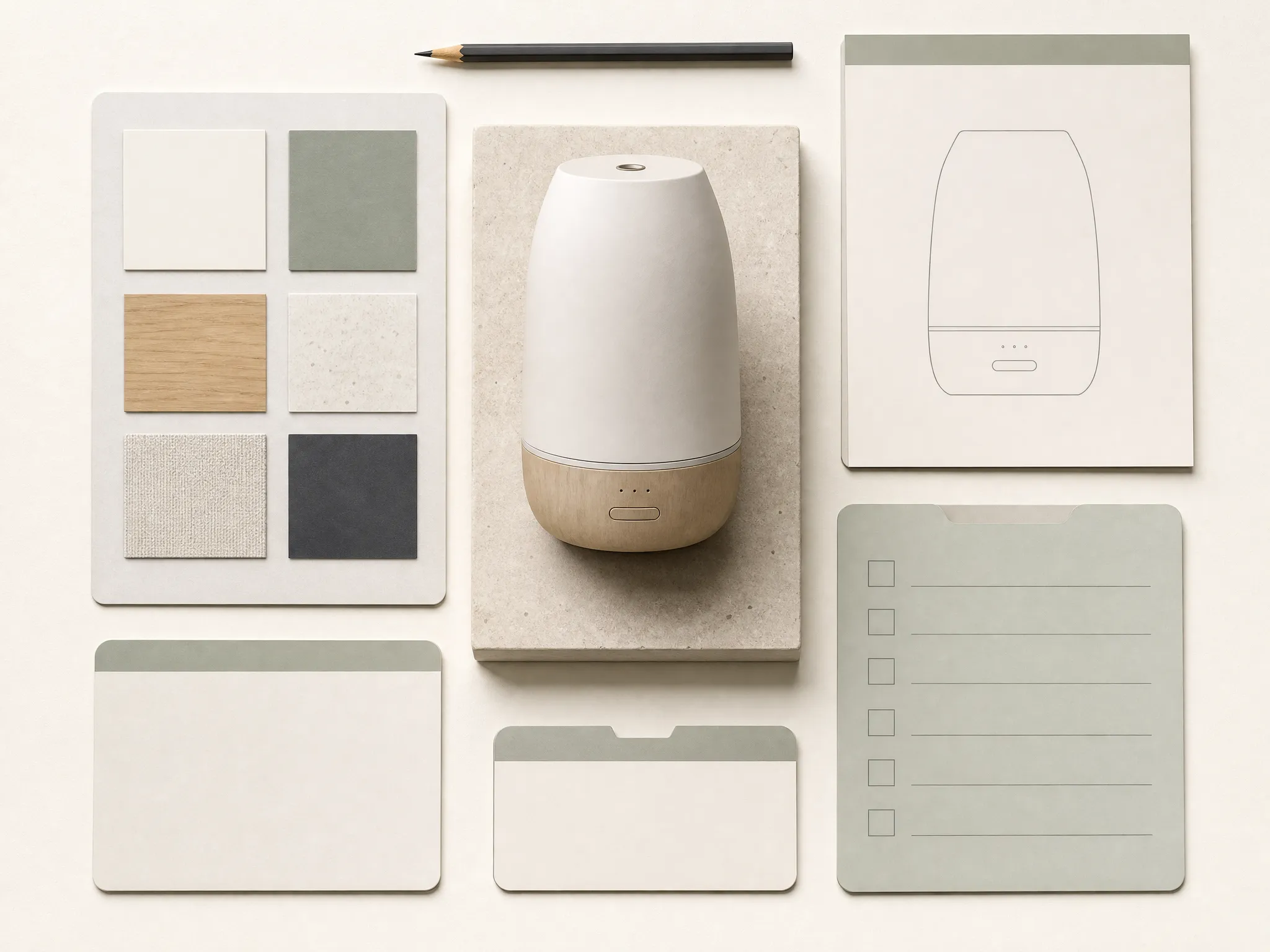
Color, material, and finish are not decorative details added at the end. They influence perceived scale, touch, reflection, cleaning, photography, and the way the product sits in a room. A spa brand may need a quiet, tactile surface. A hotel may need a finish that works with stone, timber, and metal. A retail brand may need the product to photograph consistently across different channels.
Create a CMF board with physical swatches and a written description of what must remain stable between samples. Record the reference color, finish intent, texture direction, acceptable variation, and inspection method. Avoid approving a surface from a screen alone; light, gloss, and texture can change the perceived color significantly.
4. Resolve the internal architecture before freezing the shell
The exterior should be designed around the real operating system. Confirm where fragrance enters, how a cartridge or vessel is accessed, how the user knows what to do, and how the team cleans or services the unit. A beautiful shell can create daily problems when it hides a refill path or prevents a technician from reaching a required component.
- Identify the approved fragrance delivery method.
- Map the refill or replacement path before finalizing the opening.
- Review material compatibility at every fragrance contact point.
- Confirm access for cleaning, inspection, and service.
- Keep visible controls and instructions understandable to the intended operator.
A reliable aromatherapy diffuser product development partner brings industrial design and gives the aromatherapy diffuser product development team a practical route from architecture to housing and component review together. The goal is not to expose every internal detail to the customer. The goal is to ensure the finished housing supports the product’s real operation.
5. Build the right prototype sequence
Prototype stages should answer different questions. An early appearance model can test proportion and placement. A functional prototype can test access, handling, and fragrance compatibility. A production-intent sample can review surface finish, assembly, packaging, and inspection. Calling every sample a “final sample” makes the approval history difficult to manage.
| Prototype stage | Primary question | Approval output |
|---|---|---|
| Concept model | Does the silhouette express the intended brand direction? | Selected form and design notes |
| Appearance sample | Do proportion, surface, and CMF read correctly? | Approved visual reference |
| Functional sample | Can staff access, refill, operate, and service it? | Updated operating and component notes |
| Pack-out sample | Does the diffuser survive handling and present correctly? | Approved packaging and insert |
| Production-intent sample | Can the supplier repeat the approved combination? | Master sample and inspection record |
This sequence keeps aromatherapy diffuser product development efficient and makes aromatherapy diffuser product development approvals easier to audit because a problem is solved at the stage designed to reveal it. A packaging issue should not force a complete industrial-design restart.
6. Test the prototype with real operators
Invite the people who will use the diffuser to the review. A therapist may notice a different issue from a hotel engineer, retail associate, or facilities manager. Ask each operator to complete the real sequence: receive, unpack, place, operate, refill or replace, clean around the product, and report a problem.
Record hesitation, extra steps, unclear instructions, awkward access, and damage risk. The best prototype is the one that gives the team useful information before approval. Do not rely on a designer’s successful demonstration as proof that the wider operation will be simple.
7. Treat packaging as part of product development
Packaging protects the diffuser, frames the first impression, and determines how the product enters the customer’s workflow. Define whether the package is for presentation, transport, retail shelving, hotel delivery, or replenishment. A luxury presentation carton and a back-of-house service pack may have different structures and priorities.
Review the complete pack-out with the real diffuser, accessories, care card, carton, and insert. Check opening force, component orientation, contact points, storage, and the risk of movement during handling. Keep the approved packaging file linked to the product version and supplier change history.
8. Control changes from sample to production
A supplier may need to change a material, coating, component, adhesive, insert, fragrance concentration, or assembly route. The buyer should receive notice before the change enters a repeat order. A product name is not enough to prove that a later shipment is identical to the approved sample.
Keep a master reference containing the approved appearance sample, functional notes, component list, packaging sample, fragrance record, and inspection points. State who can approve a change and what evidence the supplier must provide. This record gives procurement a clear basis for discussing consistency rather than arguing from memory.
9. Link product claims to evidence and market requirements
Before approving customer-facing claims or safety language, review current requirements for the product type and destination market. For fragrance communication, consult the International Fragrance Association. For general product-development and design-process context, the National Institute of Standards and Technology provides public guidance on measurement and standards work. These links do not replace product-specific documentation or legal review.
For related PeersHome planning, review our OEM waterless diffuser manufacturer guide, our OEM aromatherapy diffuser packaging guide, and our custom aromatherapy diffuser design guide.
10. Use a production-readiness checklist
Before approving a partner for aromatherapy diffuser product development, confirm the following. The same aromatherapy diffuser product development checklist should travel with the project through sampling and production.
- The brief defines use environment, operator, fragrance format, and market.
- Required specifications are separated from preferred visual direction.
- The CMF board has written references and a sample-review method.
- Internal access, compatibility, refill, cleaning, and service are reviewed.
- Each prototype stage has a defined question and approval output.
- Real operators have completed a practical workflow test.
- Packaging and product records are linked to the same version.
- Supplier changes require notification and documented approval.
Strong aromatherapy diffuser product development does not end when a prototype looks attractive. Planning aromatherapy diffuser product development for your brand? Send us the brief, CMF direction, and intended use environment. It ends when the brand, supplier, operator, and procurement team share the same approved reference and know how to protect it through production. Start with the use case, build the CMF direction, test the real workflow, and document every change that could affect the final customer experience.
— Elena Rostova, Lead Designer
Planning aromatherapy diffuser product development? Get your custom design prototypes started. Send us your aromatherapy diffuser product development brief and brand style guide.