Blog
Essential Oil Diffuser Buying Guide: Ultrasonic vs Nebulizing vs Ceramic (2026 Comparison)

Short answer: Finding the best home scenting setup comes down to matching diffusion technology with your room size, lifestyle, and aesthetic preferences. In this comprehensive Essential Oil Diffuser Buying Guide, we compare the four primary diffuser types—ultrasonic diffusers, waterless nebulizing diffusers, passive ceramic stone diffusers, and evaporative reed diffusers—breaking down how each system works, oil consumption rates, noise output, maintenance demands, and pet safety precautions so you can select the ideal diffuser for every room in your home.
Written by Elena Rostova, Product Design & Diffuser Engineering Director | Scent Safety Reviewed by Dr. Clara Vance, Chief Aromatherapist | Last updated: October 26, 2026
Why Choosing the Right Essential Oil Diffuser Matters
Home scenting has evolved far beyond traditional scented candles and synthetic plug-in aerosols. Today’s wellness-conscious homeowners prioritize clean, non-toxic botanicals that support relaxation, focus, and indoor air freshness without releasing endocrine-disrupting phthalates or airborne soot. According to clinical research synthesized by the National Center for Complementary and Integrative Health (NCCIH), inhaling pure botanical aromatic compounds directly interacts with olfactory receptors and the limbic system, influencing emotional well-being, stress regulation, and cognitive alertness.
However, the performance and sensory quality of botanical aromatherapy depend fundamentally on the delivery mechanism. Diffusing a delicate pure essential oil in an overheated burner degrades therapeutic terpene molecules, while running an undersized passive diffuser in an open-concept living area results in barely perceptible scent throw. By understanding the functional mechanics of modern aromatherapy devices, you can optimize fragrance throw, protect indoor air quality, and enjoy long-lasting natural ambiance.
The 4 Primary Diffuser Types Compared
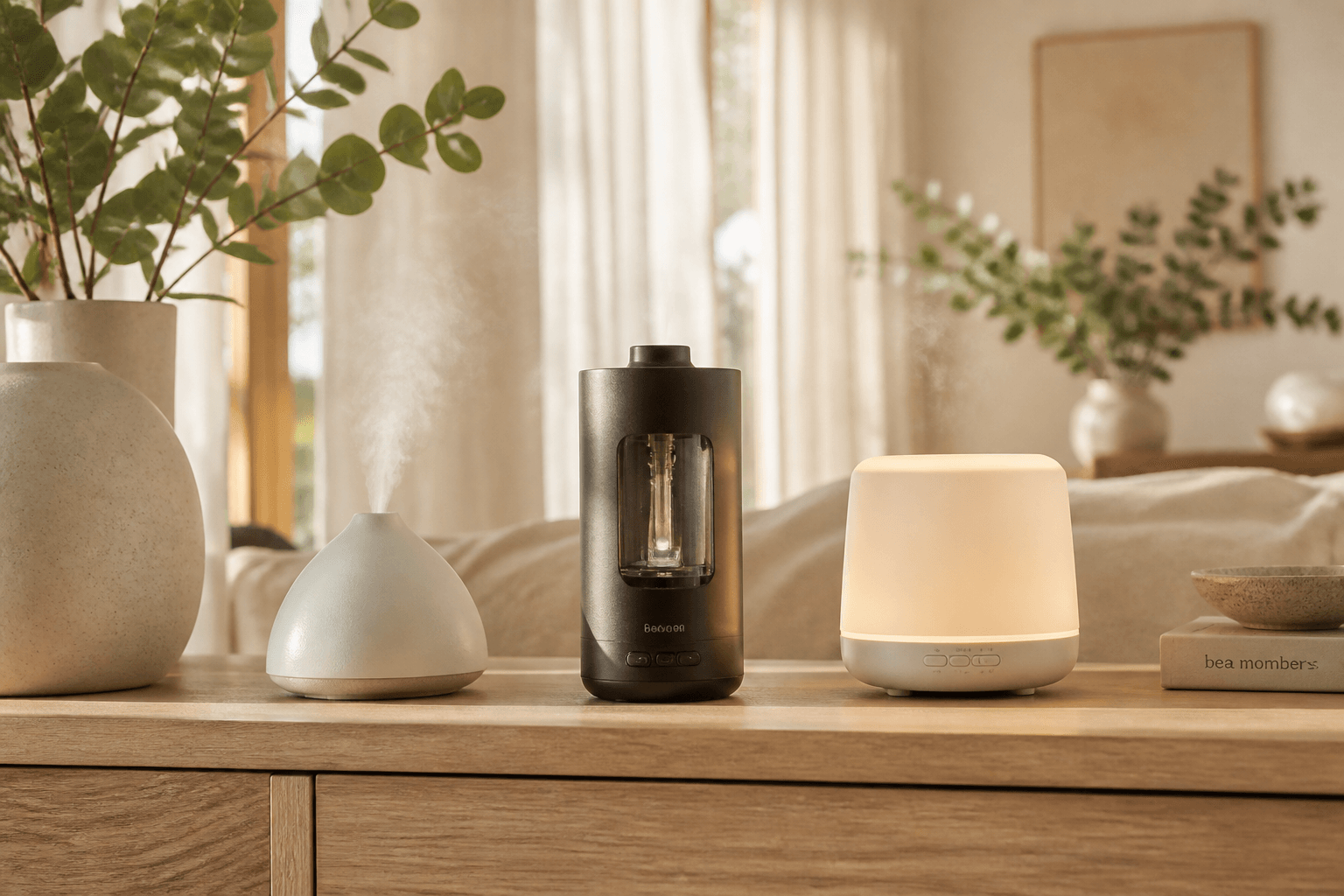
Modern essential oil diffusers utilize four distinct methods of aerosolization and evaporation. Here is a breakdown of their core mechanics, strengths, and limitations.
| Diffuser Type | Operating Mechanism | Ideal Room Size | Scent Intensity | Water Needed? | Typical Runtime |
|---|---|---|---|---|---|
| Ultrasonic Diffusers | High-frequency vibrating ceramic disc breaks water and oil into micro-mist | 150 – 400 sq. ft. (Bedrooms, Offices, Living Rooms) | Moderate (Gentle, Continuous) | Yes (100–500 mL) | 4 to 12 hours (Continuous / Intermittent) |
| Nebulizing Diffusers | Cold-air atomization and pressurized airflow break pure oil into micro-droplets | 300 – 800+ sq. ft. (Large Living Rooms, Open Layouts, Spas) | High (Concentrated, Instant) | No (100% Pure Oil) | Custom cycles (Interval burst timers) |
| Ceramic Stone Diffusers | Passive porous ceramic absorption with natural ambient evaporation | 50 – 120 sq. ft. (Bedside Tables, Desks, Powder Rooms) | Subtle (Intimate, Localized) | No | 2 to 5 days per oil recharge |
| Reed Diffusers | Capillary action through porous rattan or fiber reeds | 80 – 200 sq. ft. (Entryways, Hallways, Bathrooms) | Consistent (Background Ambience) | No (Oil Carrier Solution) | 60 to 90 days continuously |
1. Ultrasonic Diffusers: The Versatile Household Standard
Ultrasonic diffusers remain the most popular home aromatherapy devices worldwide. Inside the base of an ultrasonic unit, a small piezoelectric ceramic disc vibrates at a frequency of 1.7 to 2.4 million oscillations per second. These rapid vibrations agitate the water reservoir, atomizing the water and essential oil mixture into a lightweight, micro-fine vapor that rises into the room as a cool mist.
Key Advantages of Ultrasonic Diffusers
- Gentle Dual Action: Releases pleasant natural fragrance while adding subtle cool humidity to dry indoor spaces during winter heating or summer air conditioning.
- Whisper-Quiet Operation: Ultrasonic vibrational frequencies are entirely inaudible to human ears, emitting only a faint, soothing water trickle sound (under 20–25 dB).
- High Oil Efficiency: Only requires 3 to 8 drops of essential oil per water fill, making everyday aromatherapy economical.
- Extended Runtimes & Auto-Shutoff: Large water tanks (300 mL to 500 mL) provide up to 10 to 14 hours of continuous mist with automatic safety shut-off when water depletes.
Best Use Cases & Limitations
Ultrasonic models are ideal for master bedrooms, children’s nurseries (with pet-safe and child-safe oils), and home work desks. Their primary limitation is that water dilutes scent concentration, making them less suitable for eliminating deep, stubborn odors or filling cavernous two-story living spaces. At Peer’s Home Aroma Shop, handcrafted ceramic ultrasonic diffusers blend matte porcelain exterior covers with BPA-free ultrasonic reservoirs, marrying architectural decor aesthetics with reliable whisper-quiet misting.
2. Nebulizing Diffusers: Waterless Cold-Air Powerhouses
Nebulizing diffusers are considered the gold standard for pure therapeutic aromatherapy and professional sensory branding. Unlike ultrasonic models, nebulizers require no water, heat, or carrier liquids. They utilize Bernoulli’s principle: a high-velocity pressurized stream of cold air passes over a micro-nozzle, creating a vacuum that pulls pure essential oil upward and atomizes it into a fine suspended aerosol of microscopic botanical droplets.
Key Advantages of Nebulizing Diffusers
- Uncompromised Scent Purity: Because oils are never diluted in water or heated, you experience the complete, unaltered therapeutic chemical profile of the botanicals.
- Rapid Large-Space Coverage: Nebulizers disperse concentrated fragrance across 500 to 1,000 square feet within minutes, making them the top choice for large living rooms, yoga studios, and open-plan lofts.
- Zero Added Humidity: Perfect for high-humidity climates or coastal homes where adding water vapor to indoor air is undesirable.
- Built-In Intermittent Timers: Programmable duty cycles (e.g., 10 seconds of misting followed by 50 seconds of rest) prevent olfactory fatigue while preserving precious botanical oils.
Considerations Before Buying
Nebulizers consume essential oils at a faster rate than ultrasonic diffusers and produce a subtle mechanical hum (30–38 dB) from the internal air compression pump. They also require monthly alcohol flushing to prevent resinous oils like frankincense or patchouli from drying inside the delicate glass nebulizing chamber.
3. Passive Ceramic Stone Diffusers: Minimalist & Electricity-Free
Passive ceramic stone diffusers (also known as porous clay diffusers or aroma stones) rely on natural material porosity rather than mechanical power. Handcrafted from unglazed ceramic, natural diatomaceous clay, or porous lava stone, these compact sculptures absorb liquid essential oils into their microscopic capillary matrix and release scent gradually through ambient room airflow.
Why Passive Ceramic Diffusers Are Gaining Popularity
- 100% Silent & Cord-Free: Zero wires, zero batteries, and zero motor noise allow you to place them directly on nightstands, home office desks, or bathroom vanity counters.
- Personal Scent Radius: Generates an intimate 3-to-5-foot aromatic halo that enriches your personal breathing space without overwhelming housemates or coworkers.
- Timeless Sculptural Aesthetic: Organic stone shapes and matte ceramic textures double as sophisticated interior decor pieces.
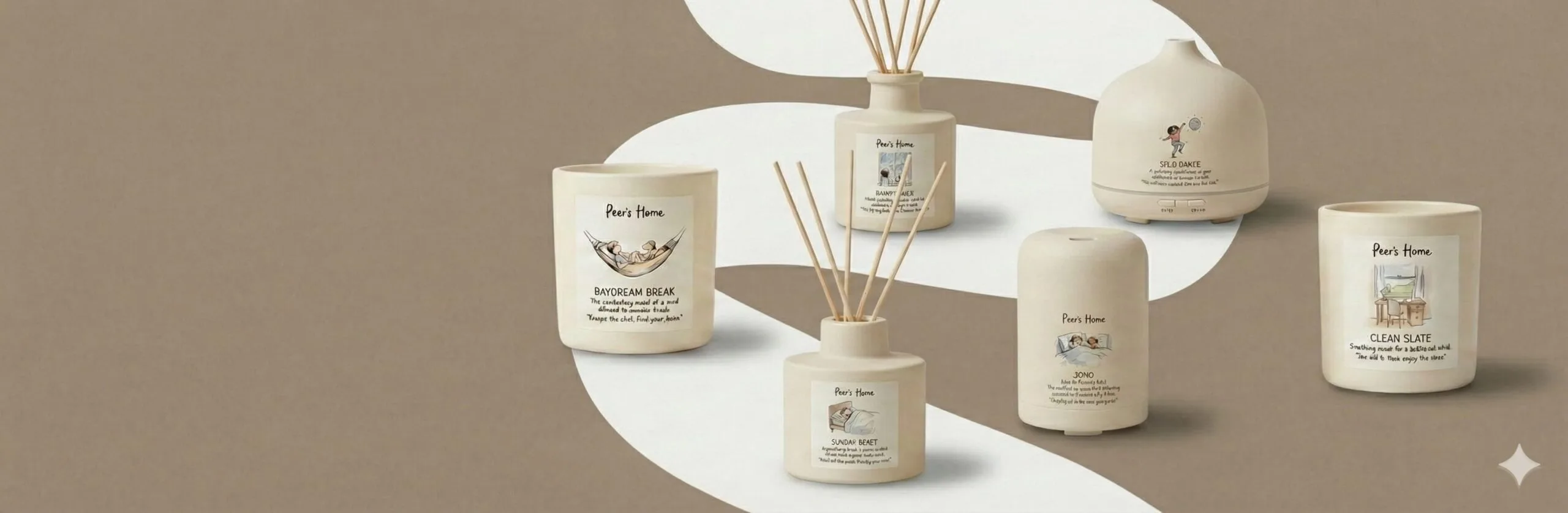
Crafted for peaceful mindful living, the signature passive stone diffusers from Peer’s Home are sculpted from high-density porous ceramic that absorbs 5 to 10 drops of botanical oil, releasing clean background scent over 48 to 72 hours without requiring power outlets or reservoir refills.
4. Reed Diffusers: Continuous 24/7 Ambient Fragrance
Reed diffusers provide continuous, maintenance-free background aroma for entryways, guest powder rooms, and walk-in closets. A glass or ceramic vessel holds a solution of essential oils blended with an eco-friendly carrier solvent. Porous rattan or high-performance synthetic fiber reeds draw the fragrant liquid upward via capillary action, allowing it to evaporate into the surrounding air.
- Set-and-Forget Convenience: Operates 24/7 for 2 to 3 months without button presses, water changes, or electrical cords.
- Adjustable Throw: Control scent intensity by adding or removing reeds (3–4 reeds for small powder rooms; 6–8 reeds for spacious foyers), flipping the reeds once weekly to refresh dispersion.
Room-by-Room Diffuser Matching Guide
To create a cohesive, harmonious home fragrance experience, match the diffusion method with the specific functional requirements of each living area:
- Master Bedroom & Guest Rooms (150–250 sq. ft.): Ultrasonic Diffuser with Warm Ambient Glow or Passive Ceramic Stone. Ultrasonic diffusers running soothing lavender, cedarwood, or Roman chamomile provide calming mist and whisper-quiet white noise that supports natural circadian sleep cycles.
- Open-Concept Living Room & Kitchen (350–700 sq. ft.): Nebulizing Diffuser or High-Capacity 500mL Ultrasonic Diffuser. Nebulizers quickly cut through cooking aromas and pet odors, filling large volume spaces with invigorating bergamot, sweet orange, or hinoki wood.
- Home Office / Focus Study (100–180 sq. ft.): Passive Ceramic Stone Diffuser or Compact Desk Ultrasonic Unit. A subtle aroma halo of rosemary, peppermint, or frankincense sharpens cognitive focus without dispersing overpowering mist onto computer monitors.
- Foyer, Hallways & Powder Rooms (50–120 sq. ft.): Reed Diffuser. Greet returning family and guests with an immediate, consistent signature scent of amber, white tea, or clean linen.
Crucial Pet Safety Guidelines for Cat and Dog Owners
While aromatherapy enriches human living spaces, pet parents must exercise deliberate caution. Cats and dogs possess highly sensitive olfactory systems and lack specific hepatic enzymes (such as glucuronyl transferase in felines) required to break down concentrated volatile hydrocarbons.
According to veterinary toxicology standards published by the ASPCA Animal Poison Control Center, the Pet Poison Helpline, and VCA Animal Hospitals, pet owners should observe the following safety rules:
- Strictly Avoid High-Risk Toxic Oils: Never diffuse tea tree (melaleuca), eucalyptus, wintergreen, pennyroyal, pine, cinnamon bark, clove, or concentrated citrus oils in confined spaces with cats or dogs.
- Pet-Friendly Botanical Choices: In low concentrations, lavender, frankincense, cedarwood (Atlas), and Roman chamomile are generally well-tolerated when diffused intermittently.
- Maintain Open Ventilation & Escape Routes: Always leave room doors open so pets can freely leave the area if a scent causes discomfort or respiratory irritation.
- Keep Equipment Out of Reach: Position diffusers and pure oil bottles on high shelves or enclosed credenzas to prevent accidental knocks, ingestion, or topical fur contact.
Cleaning and Maintenance Best Practices
Regular maintenance ensures optimal scent purity, extends appliance lifespan, and prevents bacterial or fungal buildup in water reservoirs:
- Weekly Ultrasonic Rinse: Unplug the unit, pour out remaining water from the rear side (away from air outlets), wipe the reservoir with a soft microfiber cloth, and gently clean the ultrasonic disc with a cotton swab dipped in warm water.
- Monthly Deep Vinegar Scale Clean: Fill the reservoir halfway with clean water and 1 teaspoon of white vinegar. Run the diffuser for 5 minutes in a well-ventilated space, drain completely, and wipe dry to dissolve calcium scale and oil film.
- Nebulizer Alcohol Flush: Fill an empty oil bottle with 10 mL of 70% or 90% isopropyl alcohol, attach it to your nebulizer, and run on high for 5 to 10 minutes to flush resin residues from the atomizing capillary tubes.
- Ceramic Stone Rejuvenation: If your passive stone becomes oversaturated or discolored from dark botanical oils, soak it in warm water with mild castile soap for 15 minutes, rinse thoroughly, and air dry completely for 24 hours before adding new oil blends.
Conclusion & Final Buying Checklist
Selecting the best essential oil diffuser is an investment in your daily wellness and sensory sanctuary. If you want gentle daily humidification with long runtimes, choose an ultrasonic diffuser. If your priority is maximum therapeutic potency across large rooms without water, invest in a cold-air nebulizing diffuser. For peaceful, wire-free personal aromatherapy, choose a sculptural passive ceramic stone diffuser from Peer’s Home.
By pairing premium, third-party GC/MS tested pure botanical oils with the right diffusion hardware, you can transform your home into a natural, non-toxic haven of calm and vitality.
Which type of essential oil diffuser is best for everyday home use?
For most households, an ultrasonic diffuser offers the best balance of gentle scent dispersion, whisper-quiet operation, and long runtimes (6–12 hours). However, if you require intense, waterless therapeutic aroma for large rooms or odor elimination, a cold-air nebulizing diffuser is ideal. For small personal spaces like desks, bedside tables, or powder rooms, passive ceramic stone diffusers provide subtle, electricity-free scenting.
What is the main difference between an ultrasonic and a nebulizing diffuser?
Ultrasonic diffusers mix water with a few drops of essential oil, using high-frequency vibrational plates to disperse a fine aromatic mist while adding light humidity. Nebulizing diffusers are completely waterless and heatless, using cold-air atomization and Bernoulli’s principle to break pure undiluted essential oils into micro-fine airborne particles for maximum scent intensity.
Do essential oil diffusers leave oily residue on furniture and walls?
High-quality ultrasonic and nebulizing diffusers break oils into microscopic droplets that evaporate into the air without leaving greasy residue. However, low-grade ultrasonic units with poor vibrational frequency or over-saturated reed diffusers placed directly against painted walls or unsealed hardwood can cause condensation marks over time.
Are essential oil diffusers safe to use around cats and dogs?
Yes, provided you use pet-safe botanical oils, diffuse in well-ventilated rooms with open doors, and run diffusers on intermittent timer cycles (30–60 minutes). Highly potent oils such as tea tree, eucalyptus, wintergreen, pine, and citrus must be avoided around cats and dogs due to their lack of essential liver enzymes for metabolizing specific terpenes and phenols.
How often should I clean my essential oil diffuser?
Ultrasonic diffusers should be rinsed and wiped down weekly, with a deeper monthly cleaning using diluted white vinegar to dissolve mineral scale and oil residue on the ultrasonic plate. Nebulizing diffusers should be flushed with 70% or 90% isopropyl alcohol every 2 to 4 weeks to prevent viscous oils from clogging the atomizing micro-nozzles.
How much essential oil should I use per diffusion session?
For ultrasonic diffusers, standard dosing is 3 to 5 drops per 100 mL of water for small bedrooms (up to 150 sq ft) and 6 to 10 drops per 300–500 mL of water for spacious open-plan living rooms. For nebulizing diffusers, attach a standard 10 mL or 15 mL essential oil bottle and set the device to an intermittent burst interval (such as 10 seconds on, 50 seconds off).
Can I use tap water in an ultrasonic essential oil diffuser?
Room-temperature tap water or filtered drinking water is recommended for most ultrasonic diffusers because natural mineral ions help the water conduct ultrasonic vibrations effectively. Avoid heavily softened water or pure distilled water if your manufacturer specifies tap water, but ensure you clean the reservoir regularly if your municipal water is hard.
Always read device user manuals and consult your veterinarian before introducing new botanical scents into homes with small pets or family members with respiratory sensitivities.