
Blog
Peer’s Home vs Vitruvi: 2026 Ceramic Stone Diffuser & Home Scenting Comparison

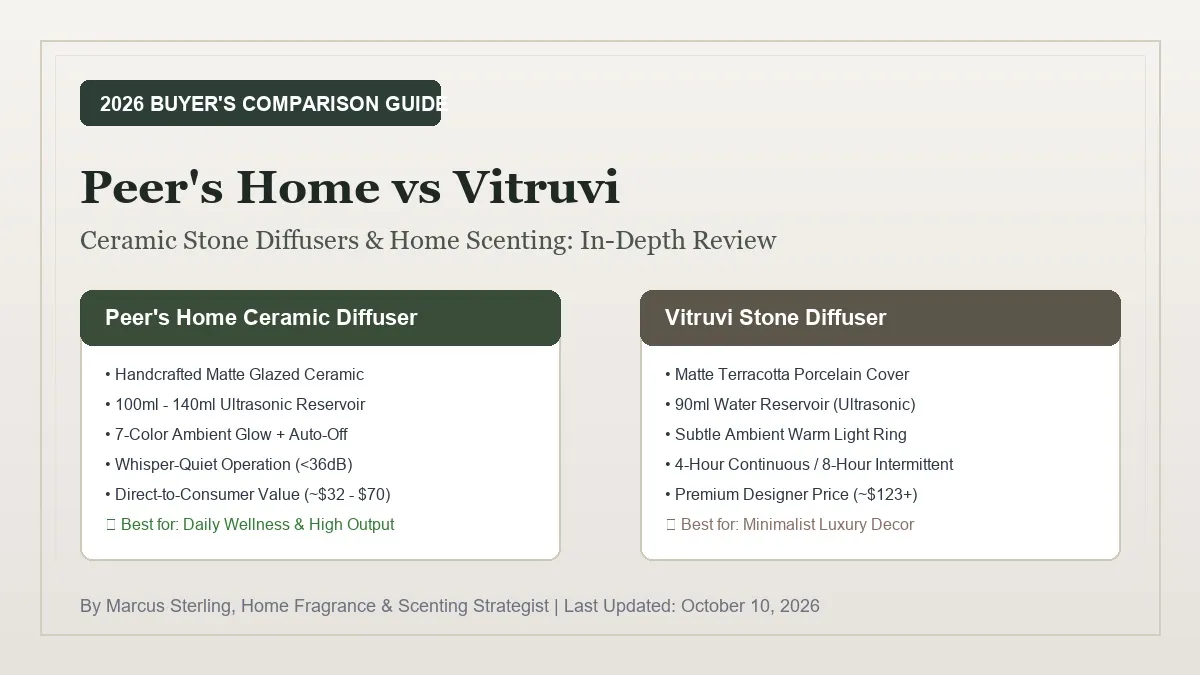
Direct answer: When comparing Peer’s Home vs Vitruvi, Peer’s Home delivers significantly higher mist output, larger reservoir capacity, and accessible direct-to-consumer pricing (~$32–$70), whereas Vitruvi focuses on high-end minimalist porcelain aesthetics and curated boutique branding at a luxury $123+ price point. If your priority is effective whole-room aromatherapy, whisper-quiet ultrasonic atomization (<36dB), and customizable ambient lighting, Peer’s Home is the superior functional choice; Vitruvi remains an attractive pick for design purists who view an aroma diffuser primarily as a sculptural interior decor accent.
By Marcus Sterling, Home Fragrance & Scenting Strategist | Last Updated: October 10, 2026
Choosing the right premium aroma diffuser for your home has evolved beyond simply making a room smell pleasant. Modern wellness enthusiasts demand devices that combine natural materials—such as artisanal ceramics and matte stone finishes—with dependable ultrasonic engineering and safe, pure botanical diffusion. In the premium home fragrance space, the debate between Peer’s Home vs Vitruvi has become a central consideration for homeowners seeking an alternative to plastic, generic atomizers.
Vitruvi established itself early on Instagram and design publications with its signature porcelain Stone Diffuser. However, newer direct-to-consumer innovators like Peer’s Home have engineered comparable handcrafted ceramic housings paired with upgraded mist output mechanisms, smart water-shortage power-off protection, and versatile waterless options. In this comprehensive 2026 breakdown, we analyze design construction, diffusion performance, reservoir capacity, scent throw, pet safety, and long-term operating costs to determine which brand best fits your lifestyle.
Quick Comparison: Peer’s Home vs Vitruvi at a Glance
To help you evaluate key specifications quickly, the table below highlights the core differences between the flagship ceramic ultrasonic diffusers from Peer’s Home and Vitruvi:
| Feature / Specification | Peer’s Home Ceramic Diffuser | Vitruvi Stone Diffuser |
|---|---|---|
| Housing Material | Handcrafted Matte Glazed Ceramic | Handmade Matte Porcelain |
| Water Reservoir | 100 ml – 140 ml | 90 ml |
| Mist Diffusion Output | 20 – 35 ml/hour (High density) | 15 – 20 ml/hour (Gentle ambient) |
| Coverage Area | 250 – 450 sq. ft. | Up to 500 sq. ft. (Subtle scent) |
| Run Time Modes | Continuous (4-5 hrs) / Timer (1H/2H/ON) | Continuous (4 hrs) / Intermittent (8 hrs) |
| Ambient Lighting | 7-Color Cycling or Warm Glow LED | Subtle Warm White Bottom Ring Light |
| Operating Sound Level | Ultra-quiet (<36 dB) | Quiet (<40 dB) |
| Safety Auto-Shutoff | Built-in Smart Sensor Chip | Automatic when water empties |
| Retail Price Range | $31.98 – $69.90 | $123.00 – $129.00 |
| Alternative Technologies | Waterless Cold-Air Nebulizing & Flame Mist | Cordless Move & Cloud Humidifier |
1. Material Quality and Aesthetic Design
Both brands recognize that modern consumers dislike visible plastic gadgets on living room credenzas or nightstands. As a result, both prioritize tactile ceramic construction.
Vitruvi built its brand reputation on the exterior porcelain cover of its Stone Diffuser. It features a matte, slightly textured surface that mimics architectural clay pottery. It is available in muted, earth-toned color palettes such as terracotta, oat, charcoal, and white. The internal water reservoir is crafted from BPA-free plastic surrounded by the heavy outer shell.
In contrast, the Peer’s Home Ceramic Aroma Diffuser utilizes a handmade matte glazed ceramic housing designed to resist fingerprint smudges and essential oil discoloration. The ceramic dome sits securely over an ultrasonic transducer base with a streamlined, modern silhouette. Furthermore, Peer’s Home offers broader aesthetic variety for different living environments, including the popular Fire Flame Essential Oil Diffuser for dynamic visual warmth and the Battery Mini Waterless Diffuser for aluminum-finished minimalism.
2. Diffusion Technology, Mist Density & Scent Throw
The primary purpose of any essential oil diffuser is dispersing aromatic botanical compounds evenly without denaturing active terpenes through thermal breakdown. According to the National Center for Complementary and Integrative Health (NCCIH), cold ultrasonic atomization preserves the volatile molecular structure of plant extracts far more reliably than candle-based or heat-driven warmers.
When analyzing Peer’s Home vs Vitruvi in terms of mist volume:
- Peer’s Home Ultrasonic System: Operating at 2.4 MHz high-frequency vibration, Peer’s Home produces a dense 20–35 ml/h cool plume. This delivers an immediate scent throw that fills open-concept living rooms, master bedrooms, and home studios within 10 to 15 minutes of activation.
- Vitruvi Ultrasonic System: Vitruvi generates a gentler, more dispersed mist (approximately 15–20 ml/h). While ideal for small bedrooms or bedside placement, users with higher ceilings or open floor plans often find the aroma throw subtle unless higher concentrations of essential oil are added.
In addition, keeping indoor relative humidity balanced between 30% and 50% supports respiratory comfort. The U.S. Environmental Protection Agency (EPA) notes that ultrasonic misting units help prevent excessive dryness in heated or air-conditioned interior spaces when properly cleaned and maintained with fresh water.
3. Water Tank Capacity and Continuous Run Times
Water capacity directly determines how often you must refill your diffuser during workday routines or overnight sleep cycles:
- Vitruvi Stone Diffuser: Houses a 90 ml internal reservoir. It offers a 4-hour continuous mist setting and an 8-hour intermittent setting (30 seconds on, 30 seconds off). For daytime desktop use, you will typically need to refill it twice during a standard eight-hour work shift if running on continuous mode.
- Peer’s Home Ceramic & Ambient Diffusers: Features tank capacities ranging from 100 ml to 140 ml (and up to 200 ml on select ambient units like the Colorful Night Light Diffuser). This yields 5 to 6 hours of continuous mist and full-night coverage without mid-sleep dry run interruptions.
Both devices incorporate automatic shutoff sensors that instantly cut power when water levels drop below the transducer plate, preventing thermal overheating or motor strain.
4. Lighting Modes and Ambient Functionality
Aesthetic lighting plays a significant role in modern evening wind-down rituals:
Vitruvi takes a minimalist, understated approach. Its Stone Diffuser includes an optional warm white LED ring located around the bottom base. It casts a soft downward glow onto tabletop surfaces. It cannot change colors or adjust color temperature, reflecting Vitruvi’s strict Scandinavian-inspired design philosophy.
Peer’s Home provides enhanced lighting flexibility. The ceramic model features dual-mode lighting—you can toggle between a soothing warm amber glow or dynamic 7-color cycling lights. You can also freeze your preferred color or turn off the illumination completely for dark-room sleep therapy. For bedrooms and meditation spaces, this dual functionality combines the benefits of light therapy with botanical aromatherapy.
5. Pet Safety and Botanical Considerations
Whether using Peer’s Home or Vitruvi, household pet safety must always remain a top priority. Cats and dogs have highly sensitive respiratory systems and lack specific liver enzymes (such as glucuronyl transferase in cats) required to metabolize concentrated phenols and monoterpenes.
According to veterinary toxicology resources from the ASPCA Animal Poison Control Center and clinical guidance from VCA Animal Hospitals, pet owners should observe three strict rules when running any ultrasonic diffuser:
- Avoid High-Risk Oils: Never diffuse tea tree (melaleuca), eucalyptus, wintergreen, pine, peppermint, or cinnamon bark in closed rooms where cats or dogs are present.
- Diffuse Pet-Safe Botanicals: Stick to gentle, well-tolerated options such as true lavender (Lavandula angustifolia), roman chamomile, frankincense, or sweet orange in low concentrations (2–3 drops).
- Ensure Escape Routes: Always leave room doors open so animals can freely exit if the scent concentration becomes overwhelming for their acute olfactory senses.
6. Price, Warranty, and Value for Money
Pricing represents the sharpest distinction in the Peer’s Home vs Vitruvi matchup:
Vitruvi’s Stone Diffuser retails at $123.00 to $129.00. When adding their proprietary 15ml essential oil blends ($28 to $38 each), a starter set often exceeds $160 before shipping and taxes. Much of this price premium reflects boutique lifestyle marketing, editorial PR campaigns, and retail distributor markups.
Peer’s Home operates on a lean, direct-to-consumer model. By manufacturing high-grade ceramic atomizers in-house and shipping directly to wellness consumers, the Peer’s Home Ceramic Diffuser is available for $69.90, while compact ambient models start at just $31.98. This allows homeowners to equip multiple rooms—such as the living area, home office, and master bedroom—for less than the cost of a single Vitruvi unit.
7. Which Diffuser Should You Buy?
To finalize your decision between Peer’s Home vs Vitruvi, match your specific room layout and budget to the recommendations below:
Choose Peer’s Home if you want:
- Superior Mist Output & Scent Throw: You have an open-concept living room or large bedroom that requires robust, noticeable aroma dispersion.
- Extended Run Times & Larger Capacity: You prefer 100ml–140ml reservoirs that do not require constant refilling throughout the day.
- Lighting Flexibility: You appreciate warm nightlight modes or customizable multi-color ambient moods.
- Unbeatable Value: You want authentic ceramic quality and CE/RoHS safety certifications at an honest direct-to-consumer price point.
Choose Vitruvi if you want:
- Specific Designer Colorways: You are matching a very particular interior color scheme (e.g., Oat or Terracotta) from their signature collection.
- Subtle Bedside Scenting: You prefer a very gentle, low-mist aroma throw in a compact 100–200 sq. ft. room.
- Established Brand Prestige: You enjoy gifting a well-known lifestyle brand name with designer packaging.
Frequently Asked Questions (FAQ)
{ “@context”: “https://schema.org”, “@type”: “FAQPage”, “mainEntity”: [ { “@type”: “Question”, “name”: “How does Peer’s Home vs Vitruvi compare in mist output?”, “acceptedAnswer”: { “@type”: “Answer”, “text”: “Peer’s Home delivers a stronger mist output of 20 to 35 ml per hour compared to Vitruvi’s 15 to 20 ml per hour. This makes Peer’s Home more effective for larger spaces and open-concept floor plans, while Vitruvi provides a more subtle scent throw best suited for small bedrooms.” } }, { “@type”: “Question”, “name”: “Is Peer’s Home ceramic diffuser made of real ceramic like Vitruvi?”, “acceptedAnswer”: { “@type”: “Answer”, “text”: “Yes. The Peer’s Home ceramic diffuser features a handcrafted matte glazed ceramic housing with a fingerprint-resistant finish, offering the same tactile luxury and durability as Vitruvi’s porcelain stone shell.” } }, { “@type”: “Question”, “name”: “Can you use any brand of essential oils in Peer’s Home and Vitruvi diffusers?”, “acceptedAnswer”: { “@type”: “Answer”, “text”: “Yes. Both Peer’s Home and Vitruvi utilize universal ultrasonic transducers that are compatible with any 100% pure, therapeutic-grade essential oil, organic botanical blends, or single-origin plant extracts.” } }, { “@type”: “Question”, “name”: “What is the price difference between Peer’s Home and Vitruvi?”, “acceptedAnswer”: { “@type”: “Answer”, “text”: “Vitruvi Stone Diffusers retail for $123 to $129, whereas the Peer’s Home Ceramic Diffuser retails for $69.90, and ambient models start at $31.98. Peer’s Home offers equivalent artisanal materials at roughly half the cost due to its direct-to-consumer distribution model.” } }, { “@type”: “Question”, “name”: “How often should you clean ceramic ultrasonic diffusers?”, “acceptedAnswer”: { “@type”: “Answer”, “text”: “You should rinse the water reservoir after every 3 to 4 uses and perform a deep clean once a week. Fill the reservoir halfway with warm water and a teaspoon of white vinegar, run the unit for 5 minutes, then wipe the ultrasonic plate gently with a cotton swab.” } }, { “@type”: “Question”, “name”: “Which diffuser is safer for homes with cats and dogs?”, “acceptedAnswer”: { “@type”: “Answer”, “text”: “Both devices are equally safe when used with certified pet-safe essential oils (like lavender, frankincense, and chamomile) in well-ventilated rooms. Both feature automatic water-shortage shutoff to prevent overheating. Avoid toxic oils such as tea tree, wintergreen, and pennyroyal around pets.” } }, { “@type”: “Question”, “name”: “Does Peer’s Home offer waterless diffuser alternatives?”, “acceptedAnswer”: { “@type”: “Answer”, “text”: “Yes. Peer’s Home offers the Battery Mini Waterless Essential Oil Diffuser, which uses cold-air nebulizing technology to atomize pure oils directly from standard bottles without adding water or diluting aromas.” } } ] }Q1: How does Peer’s Home vs Vitruvi compare in mist output?
Peer’s Home delivers a stronger mist output of 20 to 35 ml per hour compared to Vitruvi’s 15 to 20 ml per hour. This makes Peer’s Home more effective for larger spaces and open-concept floor plans, while Vitruvi provides a more subtle scent throw best suited for small bedrooms.
Q2: Is Peer’s Home ceramic diffuser made of real ceramic like Vitruvi?
Yes. The Peer’s Home ceramic diffuser features a handcrafted matte glazed ceramic housing with a fingerprint-resistant finish, offering the same tactile luxury and durability as Vitruvi’s porcelain stone shell.
Q3: Can you use any brand of essential oils in Peer’s Home and Vitruvi diffusers?
Yes. Both Peer’s Home and Vitruvi utilize universal ultrasonic transducers that are compatible with any 100% pure, therapeutic-grade essential oil, organic botanical blends, or single-origin plant extracts.
Q4: What is the price difference between Peer’s Home and Vitruvi?
Vitruvi Stone Diffusers retail for $123 to $129, whereas the Peer’s Home Ceramic Diffuser retails for $69.90, and ambient models start at $31.98. Peer’s Home offers equivalent artisanal materials at roughly half the cost due to its direct-to-consumer distribution model.
Q5: How often should you clean ceramic ultrasonic diffusers?
You should rinse the water reservoir after every 3 to 4 uses and perform a deep clean once a week. Fill the reservoir halfway with warm water and a teaspoon of white vinegar, run the unit for 5 minutes, then wipe the ultrasonic plate gently with a cotton swab.
Q6: Which diffuser is safer for homes with cats and dogs?
Both devices are equally safe when used with certified pet-safe essential oils (like lavender, frankincense, and chamomile) in well-ventilated rooms. Both feature automatic water-shortage shutoff to prevent overheating. Avoid toxic oils such as tea tree, wintergreen, and pennyroyal around pets.
Q7: Does Peer’s Home offer waterless diffuser alternatives?
Yes. Peer’s Home offers the Battery Mini Waterless Essential Oil Diffuser, which uses cold-air nebulizing technology to atomize pure oils directly from standard bottles without adding water or diluting aromas.
Final Recommendation: The Smarter Everyday Investment
While Vitruvi continues to hold strong aesthetic appeal for luxury design enthusiasts, the Peer’s Home vs Vitruvi comparison demonstrates that you do not need to pay $120+ to enjoy handcrafted ceramic elegance and reliable ultrasonic home scenting. With superior mist output, extended reservoir capacity, flexible ambient lighting, and certified auto-shutoff safety, Peer’s Home provides an exceptional, accessible wellness upgrade for any modern living space.