
Blog
Pet-Safe Essential Oils for Cats and Dogs: The Complete 2026 Aromatherapy and Diffuser Guide

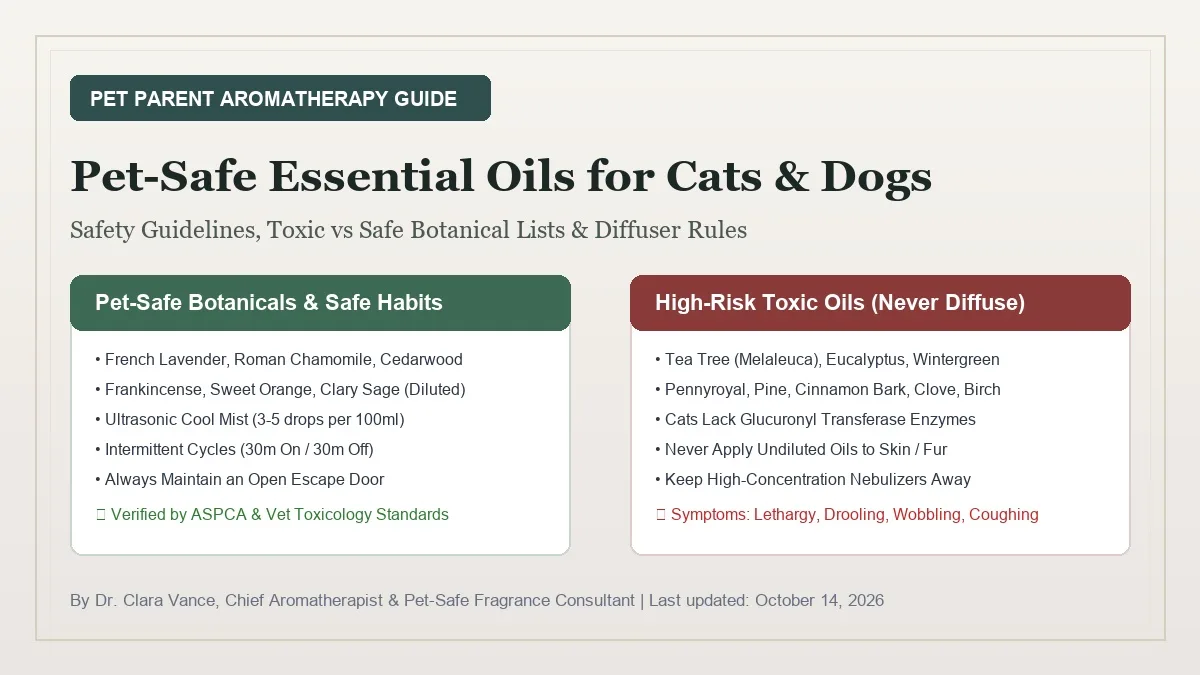
Direct answer: While pure essential oils can be dangerous to animals due to feline hepatic enzyme deficiencies and canine olfactory sensitivity, pet parents can safely diffuse botanical fragrances by choosing certified pet-safe essential oils, using water-diluted ultrasonic diffusers in well-ventilated rooms, and running intermittent diffusion cycles (30 minutes on, 30 minutes off). Well-tolerated pet-safe essential oils include true French lavender (Lavandula angustifolia), Roman chamomile (Chamaemelum nobile), and Texas cedarwood (Juniperus virginiana). Conversely, tea tree (melaleuca), eucalyptus, pennyroyal, wintergreen, and citrus oils contain high concentrations of terpenes and phenols that pose severe toxicological hazards to cats and dogs.
Modern pet parents frequently face a difficult dilemma: enjoying a fresh, inviting home fragrance while ensuring their beloved cats and dogs remain completely healthy. Unlike humans, whose livers possess comprehensive glucuronidation metabolic pathways, cats lack the essential hepatic enzyme glucuronyl transferase, making them incapable of efficiently breaking down aromatic hydrocarbons, terpenes, and phenols. Dogs, while possessing higher metabolic tolerance, have up to 300 million olfactory receptors—making concentrated aerosols overwhelming and irritating to their respiratory tracts. Navigating home aromatherapy safely requires knowing which botanical extracts are benign, understanding device mechanics, and implementing strict room-safety protocols.
By Dr. Clara Vance, Chief Aromatherapist & Pet-Safe Fragrance Consultant | Last updated: October 14, 2026
Understanding Pet Toxicology: Why Essential Oils Affect Cats and Dogs Differently
To safely select and use pet-safe essential oils, one must understand the distinct biological vulnerabilities of companion animals. Essential oils are volatile, highly concentrated organic compounds extracted from botanical leaves, bark, flowers, and rinds. A single drop of essential oil represents the biological equivalent of dozens of cups of herbal tea.
Feline Biological Vulnerabilities: Glucuronyl Transferase Deficiency
Cats are obligate carnivores with unique liver physiology. As documented by veterinary toxicology specialists at VCA Animal Hospitals, feline livers are deficient in glucuronyl transferase—a key enzyme responsible for Phase II glucuronidation detoxification. When cats inhale airborne micro-droplets or ingest oil particles during grooming, their livers cannot conjugate and eliminate these compounds. The toxins accumulate in hepatic and renal tissue, leading to acute liver failure, respiratory distress, and central nervous system depression even at low exposure levels.
Canine Respiratory and Olfactory Sensitivity
Canine livers possess functional glucuronidation enzymes, making them slightly more resilient to aromatic breakdown than felines. However, a dog’s olfactory system is up to 100,000 times more sensitive than a human’s. What smells like a subtle background scent to an adult human can feel like an overpowering, blinding sensory assault to a dog. Furthermore, micro-droplets settling on dog coats or paws can be ingested during self-cleaning, leading to gastrointestinal ulceration and ataxia.
Pet-Safe Essential Oils vs Toxic Essential Oils: The Complete Botanical Guide
The following reference table classifies popular botanical extracts into pet-safe essential oils versus high-risk toxic species based on veterinary toxicity databases from the ASPCA Animal Poison Control Center and the Pet Poison Helpline.
| Botanical Extract | Botanical Species | Cat Safety Profile | Dog Safety Profile | Key Bioactive Compounds & Risk Notes |
|---|---|---|---|---|
| French Lavender | Lavandula angustifolia | Safe (Diluted Diffuse Only) | Safe (Diluted Diffuse Only) | Contains low linalool and linalyl acetate; calming when passively diffused. Avoid Spanish lavender (high camphor). |
| Roman Chamomile | Chamaemelum nobile | Safe (Diluted Diffuse Only) | Safe (Diluted Diffuse Only) | Rich in calming angelates and esters; highly soothing for anxious pets in small doses. |
| Cedarwood | Juniperus virginiana | Safe (Diluted Diffuse Only) | Safe (Diluted Diffuse Only) | Contains cedrol; natural woody aroma with pest-repelling properties and zero feline hepatotoxicity. |
| Frankincense | Boswellia carterii | Safe (Diluted Diffuse Only) | Safe (Diluted Diffuse Only) | Contains alpha-pinene and incensole; grounding aroma with gentle respiratory tolerance. |
| Sweet Orange | Citrus sinensis | Caution (Felines sensitive to d-limonene) | Safe (Diluted Diffuse Only) | Contains d-limonene. Safe for dogs in mild diffusion; diffuse only with active room ventilation for cats. |
| Tea Tree (Melaleuca) | Melaleuca alternifolia | HIGH TOXICITY (BANNED) | HIGH TOXICITY (BANNED) | Contains terpinen-4-ol; causes rapid hypothermia, severe ataxia, and liver failure in pets. |
| Eucalyptus | Eucalyptus globulus | HIGH TOXICITY (BANNED) | HIGH TOXICITY (BANNED) | High 1,8-cineole and eucalyptol; triggers acute respiratory spasms and salivation. |
| Wintergreen & Birch | Gaultheria procumbens | FATAL TOXICITY (BANNED) | FATAL TOXICITY (BANNED) | Contains methyl salicylate (aspirin-like compound); induces severe gastrointestinal hemorrhaging and renal failure. |
| Pennyroyal | Mentha pulegium | FATAL TOXICITY (BANNED) | FATAL TOXICITY (BANNED) | Contains pulegone; causes massive acute hepatic necrosis and seizures. |
| Cinnamon Bark & Clove | Cinnamomum verum / Syzygium aromaticum | HIGH TOXICITY (BANNED) | HIGH TOXICITY (BANNED) | Contains concentrated eugenol and cinnamaldehyde; causes oral mucous ulcerations and hepatic strain. |
Top 4 Vet-Approved Pet-Safe Essential Oils for Daily Home Aromatherapy
When curating pet-safe essential oils for residential relaxation, focus on gentle, single-origin botanicals with high therapeutic index and low volatile irritants.
1. True French Lavender (Lavandula angustifolia)
True lavender is widely regarded as one of the most reliable pet-safe essential oils for calming thunderstorm anxiety, separation stress, and nighttime restlessness in dogs and cats. Unlike spike lavender or Spanish lavender, Lavandula angustifolia contains negligible levels of camphor. Research archived by the National Center for Complementary and Integrative Health (NCCIH) confirms that linalool and linalyl acetate vapors gently modulate autonomic nervous system activity without burdening mammalian respiratory passages when diffused at modest concentrations (2 to 3 drops per 100 ml of water).
2. Roman Chamomile (Chamaemelum nobile)
Roman chamomile provides a subtle, sweet apple-herbal scent profile that is remarkably gentle on sensitive canine and feline senses. Its natural ester composition promotes deep physiological relaxation and helps soothe excitable puppies and restless cats during home transitions or vet visit recovery days.
3. Texas Cedarwood (Juniperus virginiana)
True cedarwood (derived from Juniperus virginiana or Cedrus atlantica) is an earthy, grounding pet-safe essential oil that does not contain the hazardous thujone compounds found in white cedar (Thuja occidentalis). It provides a comforting woodland scent while naturally deterring fleas, moths, and environmental pests around pet living zones.
4. Frankincense (Boswellia carterii)
Frankincense is prized for its warm, resinous aroma and therapeutic mildness. When diffused intermittently in shared living rooms, frankincense helps neutralize lingering pet odors while maintaining optimal indoor air quality without irritating feline bronchial membranes.
Choosing the Right Diffuser Format for Pet-Friendly Homes
The device you use to disperse aroma is just as crucial as the botanical oil itself. Different diffuser mechanisms yield vastly different airborne droplet sizes and concentration gradients.
In homes with cats and dogs, cold ultrasonic cool mist diffusers are the safest and most effective choice. Because ultrasonic diffusers disperse essential oils suspended in a vast reservoir of micro-fine water mist, the oil concentration in the ambient air remains gently diluted. The Peer’s Home Ceramic Aroma Diffuser combines a handcrafted ceramic dome with ultrasonic micro-atomization, operating whisper-quietly below 36dB while allowing pet owners to set 1-hour and 2-hour automatic shutoff cycles that prevent olfactory saturation.
For bedrooms and nursery areas where pets sleep on floor beds, the Peer’s Home Colorful Night Light Ultrasonic Diffuser offers gentle ambient illumination and a 120 ml capacity that automatically powers down when empty. If you need a compact solution for a desk or home office where pets rest under your chair, the Peer’s Home Minimalist Aroma Diffuser provides a 140 ml water tank and dual mist intensity controls to ensure aroma stays light and localized.
Important safety note on waterless nebulizers: While waterless nebulizing diffusers are popular for pure aromatherapy, they atomize 100% undiluted essential oil directly into the atmosphere. In households with felines, birds, or small dogs, waterless nebulizers should be avoided or operated strictly in closed rooms while pets are absent, as the heavy airborne concentration can quickly overwhelm animal lungs.
7 Golden Rules for Diffusing Pet-Safe Essential Oils at Home
Follow these evidence-based operating guidelines established by veterinary toxicologists and the U.S. Environmental Protection Agency (EPA Indoor Air Division) to protect your companion animals:
- 1. Always Provide an Open Exit Route: Never trap an animal in an enclosed room where a diffuser is active. Cats and dogs must always have the freedom to walk away into an un-scented room if the aroma causes sensory discomfort.
- 2. Keep Diffusers on High, Stable Surfaces: Place your ultrasonic diffuser at least 4 to 5 feet off the floor on a sturdy mantelpiece, shelf, or tall credenza. This prevents curious pets from knocking over the water reservoir or licking spilled oil droplets.
- 3. Practice Intermittent Diffusion (30-Minute Rule): Continuous 8-hour diffusion leads to respiratory fatigue. Run your diffuser on an intermittent schedule—30 minutes on, followed by 30 to 60 minutes off—to maintain fresh air balance.
- 4. Use Conservative Dilution Ratios: Standard adult human recipes recommend 6 to 10 drops per 100 ml of water. In pet households, reduce this by half: use only 2 to 4 drops of certified pet-safe essential oils per 100 ml tank.
- 5. Never Apply Undiluted Essential Oils Topically: Never apply essential oils directly onto your dog’s or cat’s skin, paws, coat, or collar. Concentrated transdermal absorption is one of the most common causes of emergency veterinary poison admissions.
- 6. Secure Bottle Storage: Store all pure essential oil vials inside closed latched cupboards or high drawers. Cats can easily bat loose glass dropper bottles off counters, leading to glass breakage and toxic foot-pad contamination.
- 7. Clean Diffuser Water Reservoirs Weekly: Regularly wipe down ultrasonic ceramic plates with dilute white vinegar and warm water to prevent mold buildup and residual chemical oxidation that could irritate animal airways.
Recognizing Toxicity Symptoms and Veterinary Emergency Protocol
Despite best intentions, accidental exposure can occur if an unauthorized oil is diffused or a pet licks a spill. Immediate recognition of clinical symptoms saves lives. Watch for the following warning signs:
- Respiratory Distress: Panting, coughing, wheezing, laboured abdominal breathing, or repeated sneezing fits.
- Neurological Impairment: Ataxia (wobbly gait / loss of coordination), muscle tremors, extreme lethargy, disorientation, or seizures.
- Gastrointestinal Distress: Excessive drooling (ptyalism), persistent vomiting, diarrhea, or refusal to drink water.
- Ocular & Mucosal Irritation: Watery red eyes, pawing at the face or mouth, and inflamed redness along oral mucous membranes.
Emergency First Aid Action: If you suspect essential oil toxicity, immediately move your pet into fresh outdoor air and turn off all diffusion devices. If oil is on their fur, wash the area with mild dish soap (never use solvent cleaners). Never induce vomiting without veterinary instructions. Immediately contact your local emergency veterinary clinic or call the ASPCA Animal Poison Control Center (888-426-4435) or the Pet Poison Helpline (855-764-7661).
By respecting mammalian biological differences, choosing verified pet-safe essential oils, and utilizing gentle ultrasonic mist technology, you can create a harmonious, fragrant sanctuary that nurtures both your personal wellness and your pets’ lifelong vitality.
Frequently Asked Questions: Pet-Safe Essential Oils & Diffuser Safety
Are essential oils safe to diffuse around cats and dogs?
Essential oils can be safely diffused around cats and dogs only when pet parents use verified pet-safe essential oils (such as French lavender, Roman chamomile, or cedarwood) diluted in water-based ultrasonic diffusers. The room must remain well-ventilated, diffusion should be limited to 30-minute intermittent cycles, and pets must always have an open door to leave the room freely. Toxic oils like tea tree, eucalyptus, and wintergreen must never be diffused around pets.
Which essential oils are toxic to cats?
Essential oils toxic to cats include tea tree (melaleuca), eucalyptus, pennyroyal, wintergreen, pine, cinnamon bark, clove, birch, sweet birch, citrus oils (high in d-limonene), and peppermint in high concentrations. Cats lack the liver enzyme glucuronyl transferase, making them unable to metabolize these aromatic hydrocarbons and phenols.
Which essential oils are toxic to dogs?
Essential oils toxic to dogs include tea tree (melaleuca), pennyroyal, wintergreen, pine, ylang ylang, cinnamon, clove, and anise. While dogs possess glucuronidation enzymes, concentrated exposure can cause acute liver stress, vomiting, respiratory irritation, and central nervous system depression.
What are the safest essential oils to diffuse in a pet household?
The safest essential oils for pet households are true French lavender (Lavandula angustifolia), Roman chamomile (Chamaemelum nobile), Texas cedarwood (Juniperus virginiana), and frankincense (Boswellia carterii). Always ensure these botanicals are 100% pure, pesticide-free, and diffused in light dilutions (2-4 drops per 100 ml of water).
What type of diffuser is safest for homes with pets?
Ultrasonic cool mist diffusers are the safest choice for pet homes because they disperse essential oils suspended in a large volume of micro-fine water mist, preventing concentrated oil exposure. Waterless nebulizers should be avoided as they atomize undiluted pure oils that can overwhelm feline and canine airways.
What are the signs of essential oil poisoning in pets?
Signs of essential oil poisoning in cats and dogs include excessive drooling (ptyalism), lethargy, wobbly unsteady gait (ataxia), coughing or wheezing, vomiting, muscle tremors, watery red eyes, and pawing at the mouth. Seek emergency veterinary care immediately if any of these symptoms appear.
Can I apply pet-safe essential oils topically to my dog or cat?
No. You should never apply undiluted or DIY-diluted essential oils directly onto your pet’s fur, skin, paws, or collar. Direct topical application causes rapid transdermal absorption and pets inevitably ingest the oil while self-grooming, creating severe risk of systemic poisoning.
How far should a diffuser be placed from pet beds and feeding areas?
A diffuser should be placed at least 4 to 6 feet away from pet beds, feeding bowls, water dishes, and litter boxes. Always elevate the device on a stable shelf or credenza out of reach of jumping pets to prevent direct mist inhalation and accidental spills.
— Dr. Clara Vance, Fragrance Director & Aromatherapy ConsultantHave questions about pet-safe fragrance blending? Contact our laboratory team for custom guidance.