
Blog
Commercial Scent Diffusers: The Hospitality ROI Guide for 2026

The first interaction a guest has with a luxury hotel lobby is not visual—it is olfactory. Within three seconds of crossing the threshold, sensory memory begins to form a lasting impression of the brand’s identity, cleanliness, and value proposition. Yet, many hospitality properties still treat fragrance as an afterthought. For commercial procurement managers, transitioning from manual scenting to professional commercial scent diffusers is no longer a luxury; it is a strategic requirement for brand loyalty and operational efficiency.
In this comprehensive guide, we will analyze the technical mechanics of scent delivery, the data-driven ROI of ambient scenting, and the specific hardware criteria hospitality brands should prioritize when selecting commercial scent diffusers for high-traffic environments.
The Science of Sensory Branding in Hospitality
Sensory branding works by bypassing the logical brain and connecting directly with the limbic system—the area responsible for emotion and memory. Research in the hospitality sector consistently shows that a pleasant ambient scent can increase guest satisfaction scores and even influence perceived room value. When a guest walks into a lobby scented by high-performance commercial scent diffusers, their brain registers a “signature” scent that they will eventually associate exclusively with that hotel chain.

Why Standard Diffusers Fail in Commercial Spaces
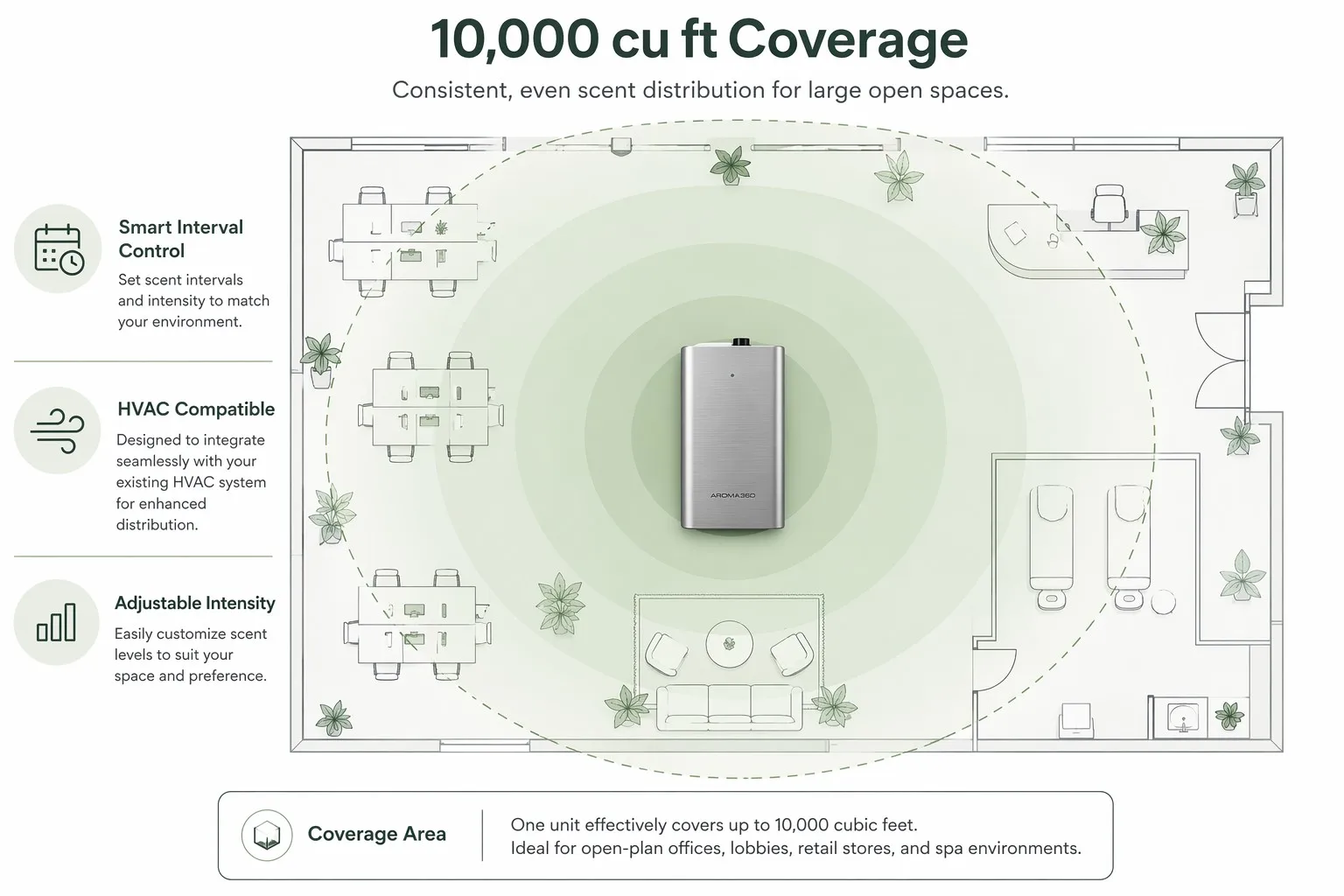
Retail-grade ultrasonic or water-based diffusers are insufficient for B2B applications. In a hotel lobby or a spa, the air volume is massive, often exceeding 10,000 cubic feet. Standard units lack the pressure to distribute fragrance evenly, leading to “scent pockets” where the smell is overwhelming near the device and non-existent ten feet away. Professional commercial scent diffusers solve this through cold-air diffusion technology.
Cold-Air Diffusion vs. Ultrasonic Methods
Cold-air diffusion uses high-pressure filtered air to atomize pure essential oils into microscopic dry particles (typically under 1 micron). These dry particles are lighter than air, allowing them to drift on natural air currents or through HVAC ducts without falling as residue. Unlike ultrasonic methods, there is no water to encourage mold growth and no heat to degrade the chemical integrity of the fragrance oil.
The ROI Calculation: Efficiency and Maintenance
For procurement teams, the decision to invest in commercial scent diffusers often comes down to the Total Cost of Ownership (TCO). While a high-end unit has a higher upfront cost, the labor savings and oil efficiency provide a rapid payback period. Manual refilling of water-based units across a 200-room property can consume hundreds of labor hours annually. Professional systems require maintenance only once every 30 to 60 days.
| Metric | Retail Ultrasonic Units | Professional Commercial Scent Diffusers |
|---|---|---|
| Maintenance Frequency | Daily (Cleaning + Water Refill) | Bi-Monthly (Oil Canister Swap) |
| Coverage Area | < 500 sq ft | Up to 15,000 sq ft (HVAC Compatible) |
| Fragrance Consistency | High Fluctuation | Digital Interval Precision |
| Residue Risk | High (Damp Surfaces) | Zero (Dry Atomization) |
Technical Specifications for Commercial Scent Diffusers
When sourcing hardware for a commercial project, the spec sheet is more important than the aesthetic design. Professional buyers should look for units with the following three features:
1. Digital Telemetry and Scheduling
A lobby does not need the same scent intensity at 3:00 AM as it does during the 4:00 PM check-in rush. Modern commercial scent diffusers feature programmable microprocessors that allow for multiple work periods per day. This “smart scheduling” prevents oil waste and ensures the environment is perfectly calibrated for human traffic patterns.
2. Matte Aluminum and Industrial Durability
Plastic casings are prone to corrosion when exposed to high-concentration fragrance oils over time. Premium commercial scent diffusers are constructed from anodized matte aluminum or high-grade steel. These materials are not only chemically resistant but also aesthetically aligned with high-end interior design standards.
3. Whisper-Quiet Atomization Pumps
A loud, buzzing pump ruins the atmosphere of a high-end spa or library. Commercial-grade pumps should operate under 35 decibels (dB). Any noise above this threshold becomes a distraction to guests, especially in quiet areas like wellness centers or executive lounges.
Strategic Integration: Commercial Scent Diffusers and HVAC Systems
One of the most effective ways to utilize commercial scent diffusers in large hospitality or corporate spaces is through direct HVAC integration. By connecting the atomization unit to the central air handling system, a brand can achieve uniform scenting across multiple floors and thousands of square feet from a single source. This method eliminates the need for standalone units in every room, significantly reducing hardware costs and maintenance touchpoints.
However, HVAC integration requires specific hardware. Standalone units intended for tabletop use lack the pressure-rated nozzles needed to push dry mist through high-velocity ducts. Professional-grade commercial scent diffusers are built with high-torque air pumps that ensure the dry oil particles stay suspended within the airflow, preventing condensation inside the ducts—a critical factor for building maintenance and air quality compliance.
The Psychological Impact on Employee Wellness and Productivity
While hospitality brands focus on guest perception, corporate offices are increasingly using commercial scent diffusers to improve employee wellness. Modern “Grade-A” office spaces are incorporating functional aromatherapy to combat “afternoon fatigue” and cognitive burnout. Scents like lemon, peppermint, and rosemary have been shown in workplace studies to reduce error rates and improve typing speed by up to 30%.
By deploying commercial scent diffusers with programmable intervals, office managers can trigger specific scent “boosts” during peak focus hours. This application of scent psychology not only improves the daily experience of the workforce but also contributes to the “Wellness Building” certifications (such as WELL or LEED) that modern developers use to attract high-value corporate tenants.
Selecting the Right Fragrance Profiles
The hardware is the delivery vehicle; the oil is the message. In B2B environments, fragrance selection must be strategic. Lobbies often utilize woody or herbal notes (Sandalwood, White Tea) to ground guests and establish luxury. Spas lean toward lavender and eucalyptus to support relaxation, while co-working spaces benefit from citrus or peppermint to enhance cognitive focus.
Compliance and Safety Standards
Responsible procurement requires verifying that the oils used in commercial scent diffusers meet global safety standards. Always request IFRA (International Fragrance Association) certificates and MSDS (Material Safety Data Sheets) from your supplier. This ensures the scent is pet-friendly, non-toxic, and safe for continuous inhalation in public spaces.
Partner with PeersHome for Scent Marketing Solutions
At PeersHome, we specialize in high-performance scent delivery for the hospitality and corporate sectors. Our range of commercial scent diffusers is engineered for durability, quiet operation, and precise scheduling. Whether you are outfitting a single boutique property or a global hotel chain, we provide the OEM/ODM support and wholesale supply chain logistics needed to scale your sensory branding program.
Contact our B2B team today to request a demo unit or a custom fragrance brief for your property. For more on the technical side of diffusion, read our guide on Wholesale Waterless Diffusers or explore the IFRA Standards for ingredient safety.
— Marcus Sterling, B2B Scent Strategist
Deploy premium scent branding today. Request a demo unit for your property.